Chinese Landscape Painting
960–1350The great tradition of shanshui (mountain-water) painting, where empty space is as important as ink. Color is the absence of color; the void speaks as loud as the mountain.
Ink on silk or paper with a pointed brush. The medium is water-based — gradations are achieved by diluting ink. Occasionally mineral pigments (azurite, malachite) are added, but the primary palette is ink + void.
Ma Yuan
1160–1225Chinese (Southern Song)
Called 'One-Corner Ma' because he composed landscapes in one corner of the painting, leaving vast areas of empty space. The void IS the painting.
Ma Yuan's technique combines firm, angular brushstrokes for rocks and trees with luminous washes for atmosphere. The empty silk represents mist, water, and infinity.
Ink dark mountain
Dense Chinese ink (pine soot + animal glue) at full concentration. Applied with firm, angular strokes for rocks and pine branches.
Material: Pine soot ink stick ground on inkstone, full concentration
RGB(30, 26, 24)
Ink mist wash
Diluted ink wash — a single stroke of heavily watered ink suggests an entire mountain lost in mist.
Material: Pine soot ink, heavily diluted wash
RGB(160, 160, 152)
Silk void
The raw silk surface left unpainted — this 'nothing' is not emptiness but active space. The void can be sky, mist, water, or infinity.
Material: Unpainted raw silk
RGB(238, 224, 208)
Ink medium
Medium-strength ink for mid-distance features — trees, bridges, figures. This is the workhorse tone of Chinese landscape.
Material: Pine soot ink, medium dilution
RGB(90, 90, 80)
Dry brush trace
Nearly dry brush dragged across silk — creating a rough, textured mark that suggests bark, rock surface, or wave foam.
Material: Pine soot ink, dry brush technique (feibai)
RGB(58, 58, 48)
Ink light wash
The lightest ink wash — barely visible on silk. Used for the most distant mountains, almost indistinguishable from the void.
Material: Pine soot ink, extreme dilution
RGB(192, 192, 184)
Pigments: Lamp black
Ni Zan
1301–1374Chinese (Yuan Dynasty)
The master of emptiness. Ni Zan's landscapes are the sparest in Chinese art — a few trees, a small pavilion, vast water, distant mountains. Nothing is superfluous.
Ni Zan used dry brush almost exclusively — minimal ink, maximum control. His style was called 'bland' (dan) — the highest compliment in Chinese aesthetics, meaning refined beyond flavor.
Dry ink pale
Ni Zan's characteristic: very little ink on the brush, creating pale, dry marks. The restraint is the expression.
Material: Pine soot ink, dry brush, minimal loading
RGB(107, 106, 96)
Raw xuan paper
Ni Zan worked on xuan (rice) paper, not silk — more absorbent, creating softer marks. The warm paper tone is most of what you see.
Material: Unpainted xuan (rice) paper
RGB(234, 226, 212)
Rock dry stroke
Medium-dry ink for the angular rocks that anchor Ni Zan's compositions. The texture comes from the paper grain catching dry brush.
Material: Pine soot ink, medium-dry on xuan paper
RGB(74, 74, 64)
Water void
The central empty expanse that dominates every Ni Zan painting — unpainted paper representing lake water. The most eloquent 'nothing' in art.
Material: Unpainted xuan paper (intentional void)
RGB(230, 216, 200)
Tree dark accent
The darkest marks in Ni Zan's palette — concentrated ink for the nearest tree trunks. Even these are restrained compared to other painters.
Material: Pine soot ink, near-full concentration
RGB(42, 42, 32)
Distance pale
The faintest ink wash for distant mountains — almost invisible, suggesting rather than describing. The mountains are half-dreamed.
Material: Pine soot ink, extreme dilution wash
RGB(184, 184, 176)
Pigments: Lamp black
Related Materials
If this palette inspired you, here’s what to paint with.
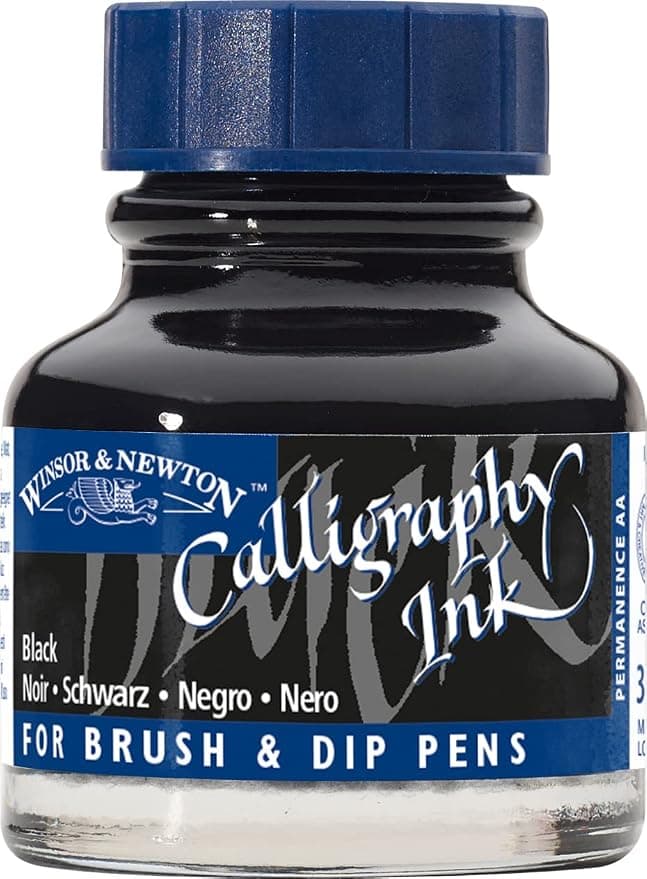 Winsor & Newton Calligraphy Ink, Black, 30mlView on Amazon
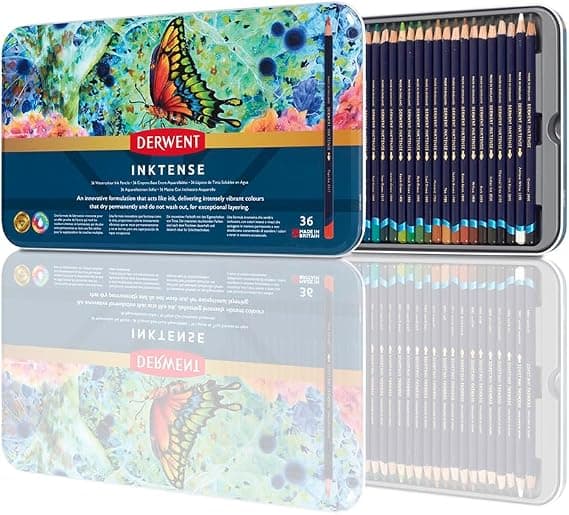 Derwent Inktense, Set of 36 Water-Soluble Ink PencilsView on Amazon
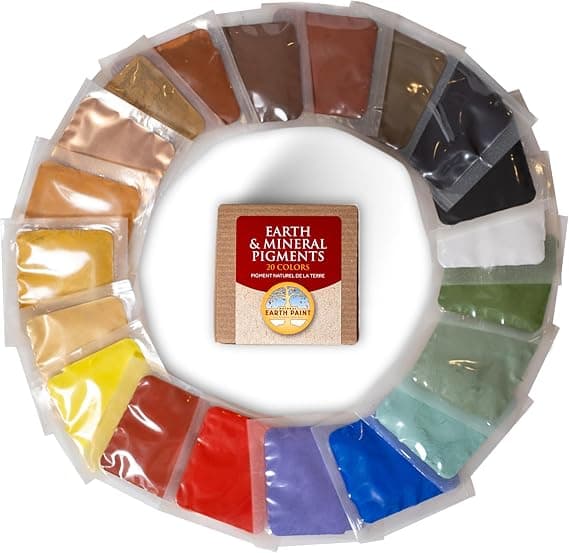 Natural Earth Paint Pigment Sample Pack, 20 Mineral PigmentsView on Amazon
As an Amazon Associate, Pigmentoria earns from qualifying purchases. This page may contain affiliate links.