Persian Miniature Painting
1370–1600One of the most chromatically sophisticated traditions in world art. Persian miniatures use pure, unmixed pigments on burnished paper to create a jewel-like luminosity.
Opaque watercolor (gouache) on paper burnished with agate to create a smooth, reflective surface. Pigments are ground extremely fine and applied undiluted. Gold leaf is integrated as color, not decoration.
Kamāl ud-Dīn Behzād
1450–1535Persian (Timurid/Safavid)
The greatest painter of the Persian tradition. Behzād brought naturalistic observation into the formal language of miniature painting without abandoning its flat, jewel-like color.
Behzād's innovation was in the subtlety of his color relationships — complementary colors placed with mathematical precision to create optical vibration.
Lapis ground
Lapis lazuli ground to extreme fineness — the same pigment as European ultramarine but applied opaquely on burnished paper, creating a denser, more velvety blue.
Material: Lapis lazuli opaque on burnished paper
RGB(26, 56, 120)
Saffron gold
Saffron-based yellow or orpiment — a warm, slightly greenish gold used for skies, backgrounds, and textile patterns.
Material: Orpiment or saffron-based yellow on burnished paper
RGB(200, 160, 40)
Pure vermilion
Mercury sulfide vermilion at full saturation — the red of Persian miniatures is purer than European use because it's applied undiluted on burnished surface.
Material: Vermilion (mercury sulfide), undiluted on burnished paper
RGB(201, 48, 32)
Garden green
Malachite or verdigris — the green of Persian garden scenes. Applied flat and opaque with crisp edges.
Material: Malachite or verdigris, opaque flat application
RGB(42, 104, 48)
Shell gold
Gold powder mixed with gum arabic (shell gold) — used for illumination, haloes, and textile patterns. Real gold that catches light.
Material: Gold powder in gum arabic binder
RGB(184, 144, 32)
Persian flesh
Lead white + yellow ochre + vermilion in thin, precise application. Persian miniature flesh is smooth and idealized, not naturalistic.
Material: Lead white + yellow ochre + vermilion, fine brush
RGB(216, 176, 136)
Pigments: Ultramarine · Orpiment · Vermilion · Verdigris · Malachite · Ochre · Lead white
Sultan Muhammad
1470–1555Persian (Safavid)
The head of the royal atelier under Shah Tahmasp. Sultan Muhammad's Court of Gayumars is considered the greatest single page of Persian painting.
Sultan Muhammad's technique is almost impossibly refined — gold leaf, silver, and up to 40 pigment layers on a single miniature. His work represents the absolute peak of the tradition.
Rock gold
Gold leaf burnished onto the painted surface — entire rock formations rendered in gold, creating a supernatural landscape.
Material: Gold leaf, burnished onto painted surface
RGB(168, 128, 32)
Reference: Court of Gayumars (c. 1524)
Foliage emerald
Malachite at maximum density for the lush vegetation of the Gayumars scene. On burnished paper, the green has a mineral brilliance.
Material: Malachite at maximum density on burnished paper
RGB(26, 90, 40)
Sky turquoise
Turquoise blue — possibly actual ground turquoise or a mix of lapis + malachite. A color unique to Persian painting.
Material: Lapis lazuli + malachite mix or ground turquoise
RGB(42, 136, 160)
Leopard spot
Raw umber + yellow ochre for the animal skins in the Gayumars scene. Applied with a single-hair brush, each spot individual.
Material: Raw umber + yellow ochre, single-hair brush
RGB(122, 90, 40)
Rose garden pink
Cochineal or lac dye + lead white — the pink of Persian roses and cheeks. A cool, luminous pink impossible in oil painting.
Material: Cochineal lake + lead white in gum arabic
RGB(216, 128, 144)
Silver stream
Silver leaf for rivers and streams — now tarnished to grey-black in most surviving manuscripts. Originally it would have caught light like water.
Material: Silver leaf, burnished (now tarnished)
RGB(169, 168, 176)
Pigments: Gold leaf · Malachite · Ultramarine · Ochre · Umber · Madder and the red lakes · Lead white · Silver
Related Materials
If this palette inspired you, here’s what to paint with.
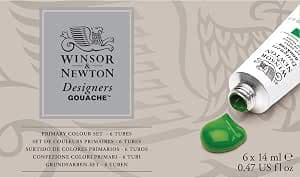 Winsor & Newton Designers Gouache, Set of 6 TubesView on Amazon
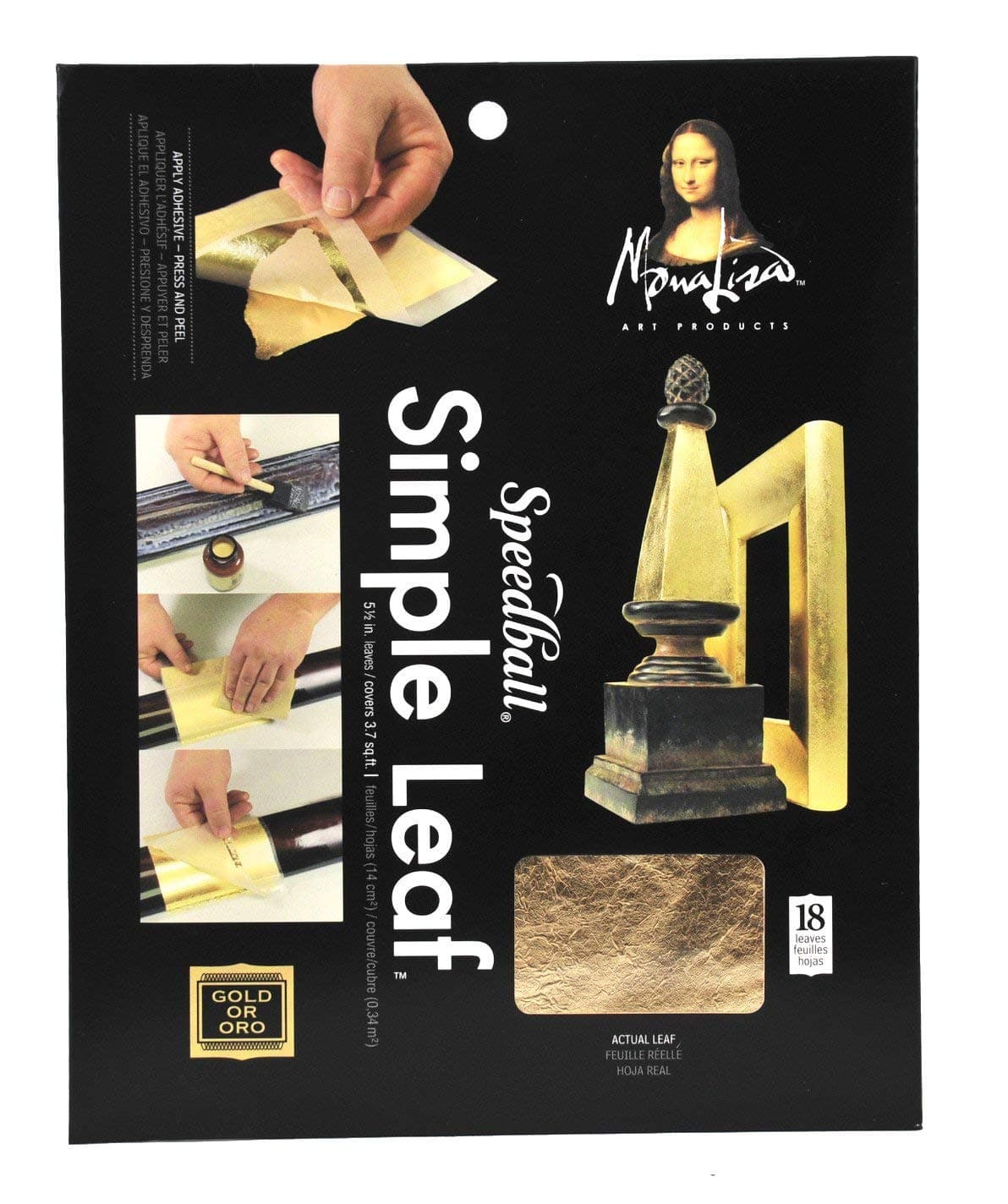 Mona Lisa Gold Leaf Sheets for Gilding, 18 PackView on Amazon
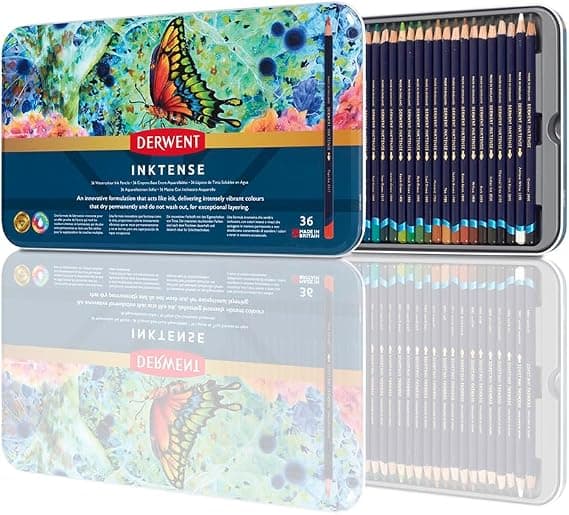 Derwent Inktense, Set of 36 Water-Soluble Ink PencilsView on Amazon
As an Amazon Associate, Pigmentoria earns from qualifying purchases. This page may contain affiliate links.