Tinting & Toning
1895–1930Before color film existed, prints were dipped in dye baths or chemically toned. Night scenes were blue, fire was red, daylight was amber.
Tinting: entire film dipped in dye. Toning: silver replaced with colored compound. Sometimes combined — tinted AND toned.
International
Before 1930, over 80% of films used some form of color — not photographed color, but applied color.
Tinting colored the light areas (gelatin). Toning colored the dark areas (silver). Combined, they created two-tone images.
Night tint blue
Blue dye bath for night scenes — universal convention.
Material: Methylene blue or aniline blue dye bath
RGB(27, 58, 106)
Fire tint red
Red tinting for fire, passion, danger.
Material: Erythrosine or eosin red dye bath
RGB(169, 42, 26)
Daylight amber
Amber tint for daytime exterior scenes.
Material: Chrysoidine or auramine yellow-amber dye
RGB(202, 154, 80)
Sepia tone
Sepia toning for warm interior scenes — silver replaced with silver sulfide.
Material: Silver sulfide sepia toning chemical process
RGB(138, 106, 58)
Moonlight green
Green tinting for moonlit gardens and forests.
Material: Malachite green dye bath
RGB(44, 90, 74)
Rose tint
Pink tinting for romantic scenes.
Material: Rose Bengal or rhodamine dye bath
RGB(200, 138, 138)
Pigments: Silver
Related Materials
If this palette inspired you, here’s what to paint with.
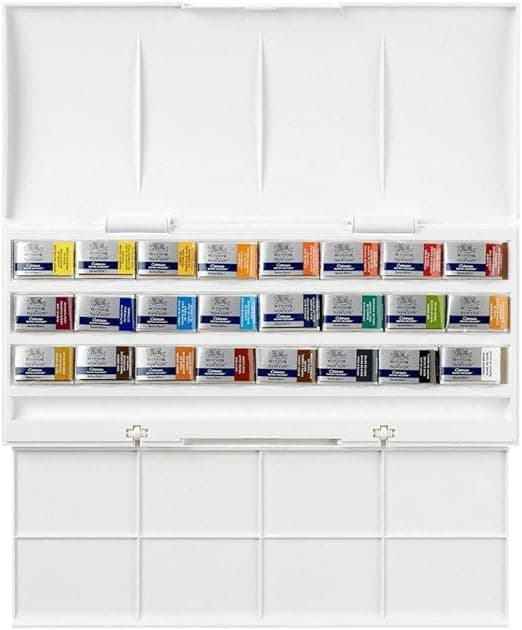 Winsor & Newton Cotman Watercolour Studio Set, 24 Whole PansView on Amazon
 Winsor & Newton Calligraphy Ink, Black, 30mlView on Amazon
 Moleskine Art Plus Watercolor Album, LargeView on Amazon
As an Amazon Associate, Pigmentoria earns from qualifying purchases. This page may contain affiliate links.