High Renaissance
1490–1527The apex of Renaissance idealism — perfect proportion, sfumato atmosphere, and pigments ground to microscopic fineness.
Egg tempera giving way to oil on panel/canvas. Sfumato through dozens of translucent glazes. Ultramarine from lapis lazuli, lead white, verdigris, earth pigments.
Leonardo da Vinci
1452–1519Italian
Painter, polymath, inventor. Pioneer of sfumato — imperceptible tonal transitions through dozens of oil glazes.
Deliberately restrained palette. Earth tones modulated through sfumato for atmospheric depth. Shadows warm, never black.
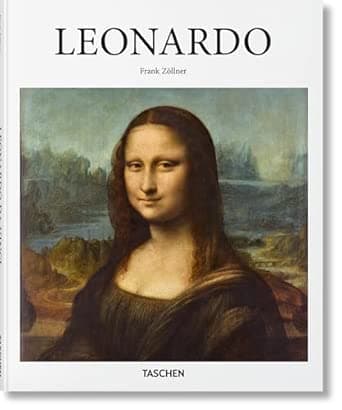 Further reading: Leonardo (Basic Art Series 2.0) — Frank Zöllner
Sfumato veil
Warm grey-brown of atmospheric transitions. Translucent umber glazes over lighter grounds.
Material: Raw umber in walnut oil, 30+ glazes
RGB(139, 125, 107)
Florentine flesh
Flesh tones over green-grey verdaccio underpainting with lead white and earth pigments.
Material: Lead white, yellow ochre, verdaccio underpainting
RGB(196, 168, 130)
Grotto shadow
Deep warm shadows — never pure black, always with brown warmth from burnt umber.
Material: Burnt umber, lamp black in walnut oil
RGB(61, 52, 40)
Lazurite distance
Atmospheric perspective — increasingly blue and desaturated tones for distant elements.
Material: Ultramarine thinned with lead white
RGB(107, 143, 173)
Verdaccio base
Green-grey underpainting for all flesh tones. Visible in unfinished works.
Material: Terre verte, yellow ochre, lead white, carbon black
RGB(122, 122, 94)
Amber candlelight
Warm golden highlight on foreheads and noses — lead-tin yellow over verdaccio.
Material: Lead-tin yellow, lead white in walnut oil
RGB(184, 150, 74)
Pigments: Umber · Ochre · Lead white · Lamp black · Ultramarine · Green earth · Lead-tin yellow
Michelangelo Buonarroti
1475–1564Italian
Sculptor, painter, architect. The Sistine ceiling restoration exposed saturated hues that stunned the art world.
Buon fresco — pigment on wet plaster. Limited to lime-resistant pigments. Characteristically matte, chalky surfaces.
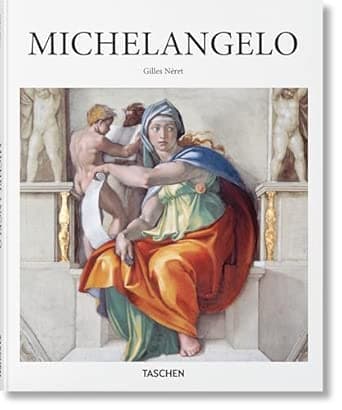 Further reading: Michelangelo (Basic Art) — Gilles Néret
Sistine azure
Intense blue from Sistine restoration. Ultramarine applied a secco over dry fresco.
Material: Ultramarine from Afghan lapis lazuli, casein binder
RGB(74, 127, 181)
Ignudo flesh
Warm sculptural flesh — modeled through color intensity rather than just value.
Material: Yellow ochre, red ochre, lime white in buon fresco
RGB(212, 165, 116)
Prophet's mantle
Rich green of prophetic robes. Terre verte reinforced with malachite for durability in fresco.
Material: Terre verte, malachite, lime white
RGB(91, 140, 90)
Creation lilac
Lilac-mauve of God's mantle in Creation of Adam. Ultramarine mixed with red ochre.
Material: Ultramarine with red ochre
RGB(155, 123, 168)
Fresco shadow
Warm, transparent shadows. Burnt sienna over damp intonaco creates glowing shadows.
Material: Burnt sienna in buon fresco
RGB(107, 66, 38)
Lime highlight
Bianco San Giovanni — aged lime putty applied thickly. Chalky luminescence unique to fresco.
Material: Bianco San Giovanni
RGB(232, 220, 200)
Pigments: Ultramarine · Ochre · Lime white · Green earth · Malachite · Sienna
Raphael Sanzio
1483–1520Italian
Achieved ideal harmony of color, composition, expression. His Madonnas defined beauty for centuries.
Broader palette than Leonardo, more saturated than Michelangelo. Combined Florentine drawing with Venetian color.
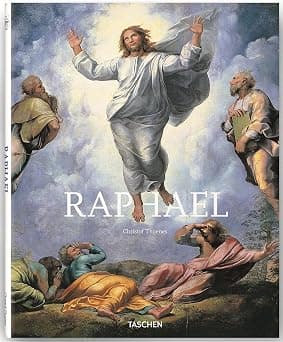 Further reading: Raphael — Christof Thoenes
Madonna blue
Deep saturated blue of the Virgin's mantle. Pure ultramarine in multiple glazes over white ground.
Material: Ultramarine from lapis lazuli in oil
RGB(43, 90, 140)
Carmine drapery
Vermilion body with crimson lake glazes — red shifts warm to cool across the fold.
Material: Vermilion, crimson lake (kermes) glaze
RGB(168, 50, 50)
Ideal flesh
Warmer and more golden than Leonardo's — less sfumato, more Venetian warmth.
Material: Lead white, vermilion, yellow ochre in oil
RGB(224, 186, 138)
Arcadian green
Idealized landscape green. Stable mix of yellow ochre and azurite.
Material: Yellow ochre and azurite mixture
RGB(92, 122, 74)
Putto blush
Rosy warmth of cherub flesh — more pink than adult flesh tones.
Material: Lead white, minimal vermilion, carmine lake
RGB(212, 160, 160)
Stanza gold
Golden backgrounds of Vatican Stanze — gold leaf and paint coexisting.
Material: Gold leaf and orpiment in oil
RGB(196, 168, 74)
Pigments: Ultramarine · Vermilion · Madder and the red lakes · Ochre · Lead white · Azurite · Orpiment · Gold leaf
Related Materials
If this palette inspired you, here’s what to paint with.
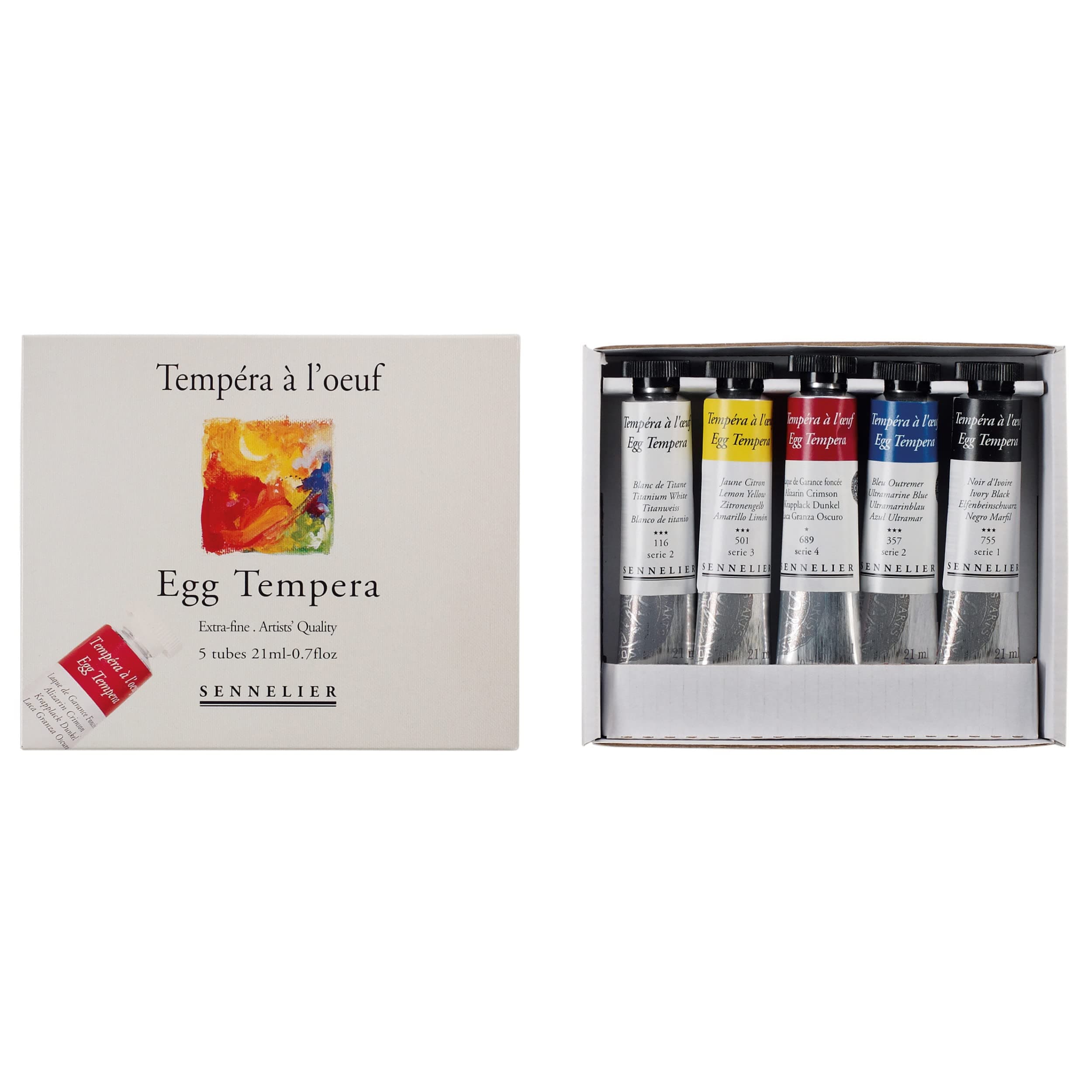 Sennelier Egg Tempera Set, Assorted ColorsView on Amazon
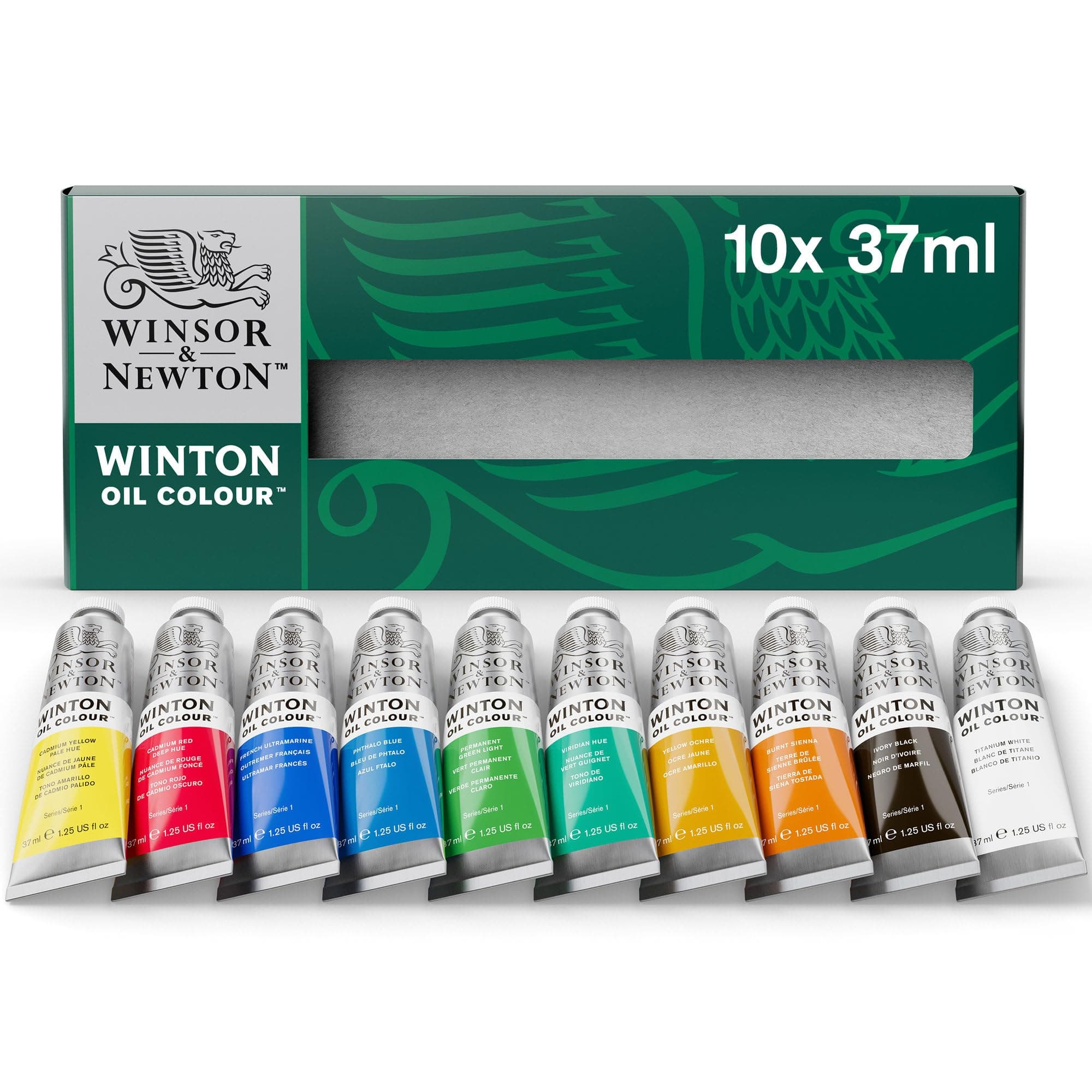 Winsor & Newton Winton Oil Colour Starter Set, 10 TubesView on Amazon
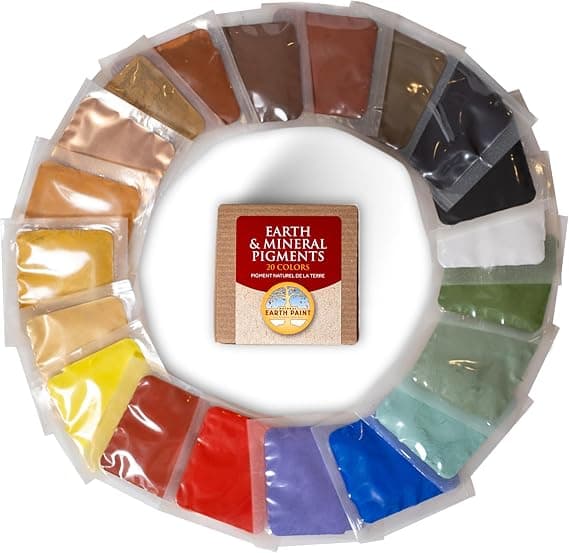 Natural Earth Paint Pigment Sample Pack, 20 Mineral PigmentsView on Amazon
As an Amazon Associate, Pigmentoria earns from qualifying purchases. This page may contain affiliate links.