Post-Impressionism
1886–1910Beyond Impressionism — structure (Cézanne), symbol (Gauguin), emotion (Munch). Each painter found a different path beyond pure optical observation.
New synthetic pigments. Cézanne's constructive stroke, Gauguin's cloisonnism, Munch's psychological distortion.
Vincent van Gogh
1853–1890Dutch
Painting as emotional autobiography. Each brushstroke carries psychological weight. Transformed color into feeling.
Thick impasto with visible directional brushwork. Complementary color juxtapositions for maximum vibration. Chrome yellow and cobalt blue as primary axis.
 Further reading: Van Gogh (Taschen) — Ingo F. Walther, Rainer Metzger
Starry Night blue
The deep cobalt blue of swirling night sky.
Material: Cobalt blue, Prussian blue, thick impasto
RGB(26, 58, 122)
Sunflower chrome
The intense chrome yellow of the Sunflowers — Van Gogh's signature.
Material: Chrome yellow (now darkened in many paintings)
RGB(232, 192, 32)
Cypress green
Dark writhing green of Provençal cypress trees.
Material: Viridian, chrome green, Prussian blue
RGB(42, 74, 42)
Arles vermilion
The red of the Night Café — deliberate 'terrible passions.'
Material: Vermilion, red lead
RGB(200, 48, 32)
Wheat field gold
Golden wheat under a threatening sky.
Material: Chrome yellow, yellow ochre, cadmium yellow
RGB(200, 160, 48)
Absinthe green
Acidic yellow-green — the color of the Night Café's billiard table.
Material: Emerald green (Paris green), chrome yellow
RGB(90, 138, 58)
Pigments: Prussian blue · Cobalt blue · Chrome yellow · Viridian · Chrome green · Vermilion · Red lead · Cadmium yellow · Ochre · Emerald green
Paul Cézanne
1839–1906French
Father of modern art. Built form through color patches — every brushstroke a deliberate constructive decision.
The 'constructive stroke' — parallel diagonal marks that build form through color temperature shifts rather than value contrast.
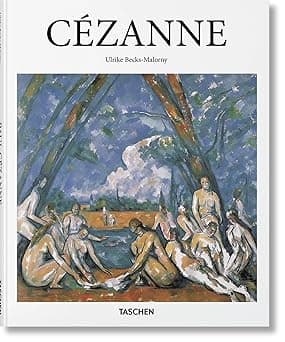 Further reading: Cézanne (Basic Art) — Ulrike Becks-Malorny
Mont Sainte-Victoire blue
The blue of the mountain seen through Provençal atmosphere.
Material: Cobalt blue, ultramarine, lead white
RGB(90, 122, 170)
Still life apple green
The precise green of apples modeled through color patches.
Material: Viridian, chrome green, cadmium yellow
RGB(106, 138, 74)
Provençal ochre
Warm ochre of Aix-en-Provence earth and buildings.
Material: Yellow ochre, raw sienna, cadmium yellow
RGB(200, 160, 96)
Constructive grey
The neutral grey that mediates between warm and cool in his compositions.
Material: Lead white, ivory black
RGB(139, 138, 138)
Tablecloth fold
The rumpled white that anchors his still lifes.
Material: Lead white, zinc white with warm undertone
RGB(226, 216, 200)
Bather flesh
The schematic flesh of the late Bathers — more constructed than observed.
Material: Yellow ochre, vermilion, lead white, viridian shadow
RGB(200, 160, 128)
Pigments: Ultramarine · Cobalt blue · Lead white · Cadmium yellow · Viridian · Chrome green · Ochre · Sienna · Bone black · Zinc white · Vermilion
Paul Gauguin
1848–1903French
Abandoned Parisian civilization for Polynesia. Invented synthetism — flat areas of bold color enclosed in dark outlines.
Cloisonnism/synthetism — bold flat color areas. Rejected optical mixing. Anti-naturalistic color as emotional/symbolic language.
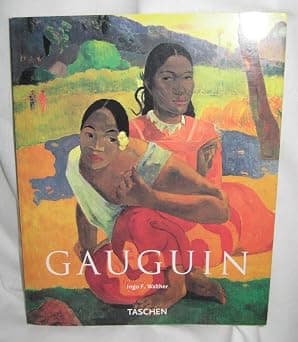 Further reading: Gauguin (Taschen Basic Art) — Ingo F. Walther
Tahitian skin
Warm brown-gold of Polynesian flesh — idealized, not observed.
Material: Yellow ochre, burnt sienna, cadmium orange
RGB(184, 122, 58)
Vision after Sermon red
The flat, anti-naturalistic red ground — color as symbol.
Material: Vermilion, cadmium red on flat ground
RGB(200, 32, 32)
Nave Nave Moe green
Saturated tropical green — deeper than European landscape.
Material: Viridian, emerald green, chrome green
RGB(43, 106, 58)
Pareo blue
Deep blue of Tahitian textiles.
Material: Prussian blue, ultramarine
RGB(44, 74, 122)
Cloisonné yellow
Flat bright yellow — Christ in the Garden of Olives.
Material: Chrome yellow, cadmium yellow
RGB(232, 192, 64)
Mystery violet
Dark violet of spiritual mystery in Polynesian scenes.
Material: Cobalt violet, crimson lake, Prussian blue
RGB(90, 42, 90)
Pigments: Cadmium yellow · Ochre · Sienna · Vermilion · Emerald green · Viridian · Chrome green · Ultramarine · Prussian blue · Chrome yellow · Madder and the red lakes · Cobalt violet
Toulouse-Lautrec
1864–1901French
Painter of Montmartre nightlife — cabarets, dancers, brothels. Master of lithographic poster design.
Thinned oil paint on unprimed cardboard — the brown board shows through as a warm midtone. Quick, sketch-like execution.
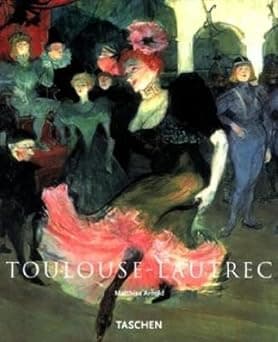 Further reading: Toulouse-Lautrec (Basic Art) — Matthias Arnold
Cardboard ground
Unprimed cardboard as dominant tone — the support IS the painting.
Material: Bare cardboard
RGB(168, 138, 96)
Gaslight green
The green tint of gaslit interiors.
Material: Viridian, chrome green thinned
RGB(106, 138, 90)
Moulin Rouge red
Bright red of cabaret lights and lips.
Material: Vermilion, cadmium red
RGB(200, 48, 48)
Stockings black
Graphic black of dancers' stockings and outlines.
Material: Ivory black, thinned
RGB(28, 26, 24)
Absinthe glow
Acidic yellow of café lighting.
Material: Chrome yellow, cadmium yellow on cardboard
RGB(202, 176, 64)
Powder flesh
Pale powdered flesh of performers and courtesans.
Material: Lead white, yellow ochre, thin on cardboard
RGB(217, 184, 160)
Pigments: Viridian · Chrome green · Vermilion · Bone black · Chrome yellow · Cadmium yellow · Ochre · Lead white
Edvard Munch
1863–1944Norwegian
Painter of existential anguish. The Scream crystallized modern anxiety into a single image.
Anti-virtuosic technique — thin washes, visible canvas. Color used for psychological, not optical truth.
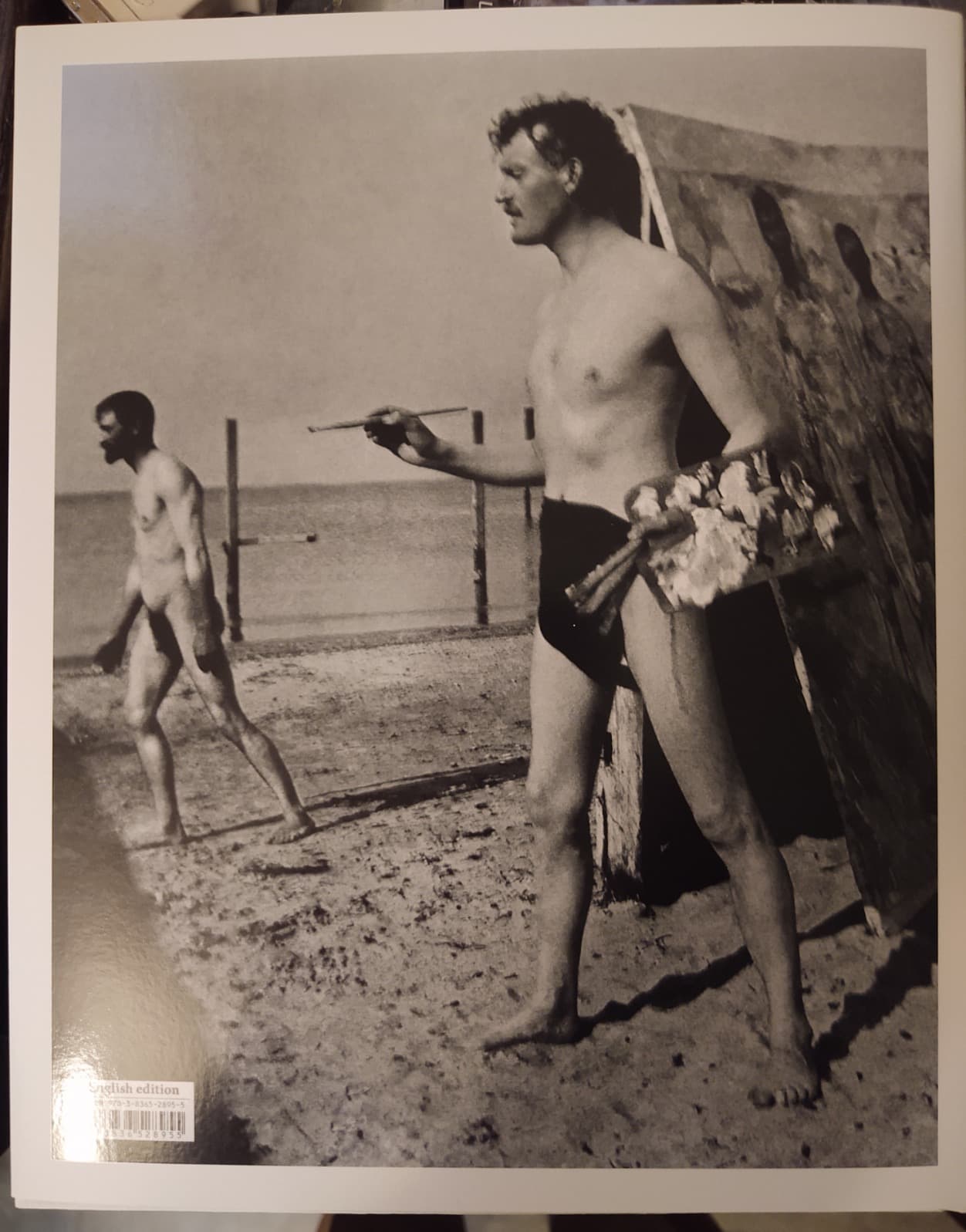 Further reading: Munch (Basic Art) — Ulrich Bischoff
Scream sky orange
The molten orange-red of the screaming sky — volcanic sunset.
Material: Cadmium orange, vermilion, chrome yellow
RGB(216, 104, 48)
Fjord blue
Cold Norwegian blue of water and despair.
Material: Prussian blue, cobalt blue
RGB(42, 74, 106)
Sick child green
Pallid green of illness — the color of the Sick Child's pillow.
Material: Terre verte, chrome green, lead white
RGB(90, 106, 74)
Death room flesh
Sallow, unhealthy flesh — thin paint exposing canvas.
Material: Yellow ochre, lead white, thin wash
RGB(200, 168, 128)
Jealousy green
Dark poisonous green of Jealousy paintings.
Material: Viridian, chrome green darkened
RGB(58, 90, 42)
Vampire red
Dark red of blood and passion in Vampire.
Material: Alizarin crimson, vermilion
RGB(139, 26, 26)
Pigments: Vermilion · Chrome yellow · Cadmium yellow · Prussian blue · Cobalt blue · Green earth · Chrome green · Lead white · Ochre · Viridian · Alizarin crimson
Related Materials
If this palette inspired you, here’s what to paint with.
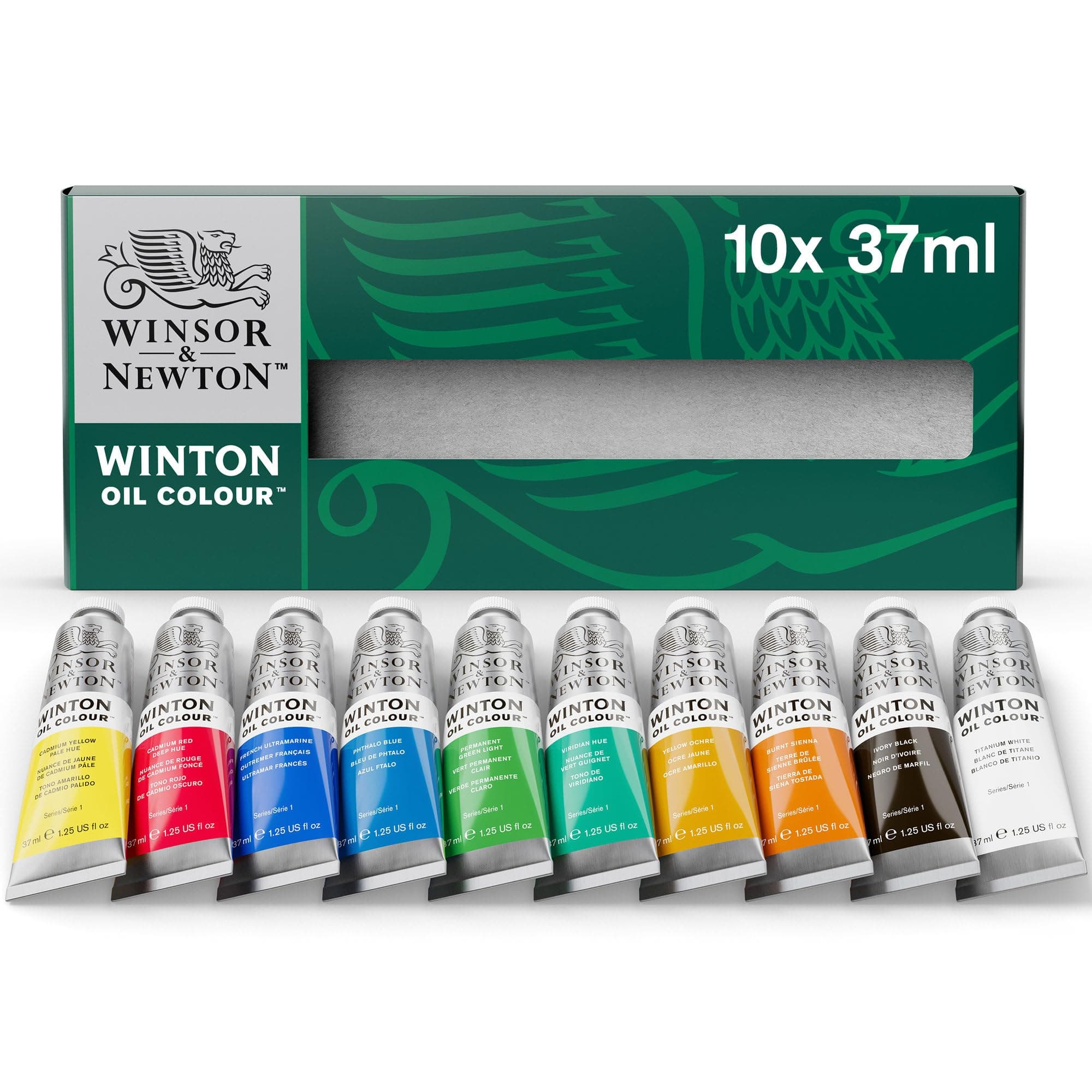 Winsor & Newton Winton Oil Colour Starter Set, 10 TubesView on Amazon
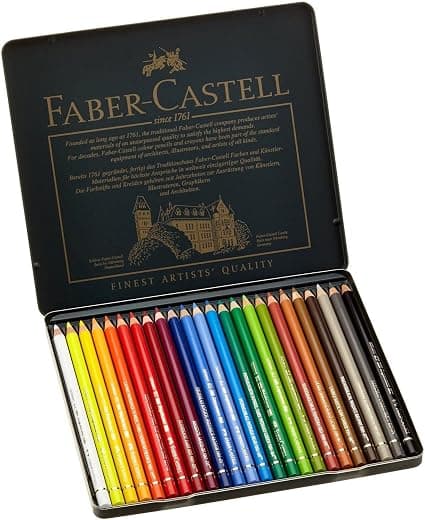 Faber-Castell Polychromos Artists’ Colour Pencils, Tin of 24View on Amazon
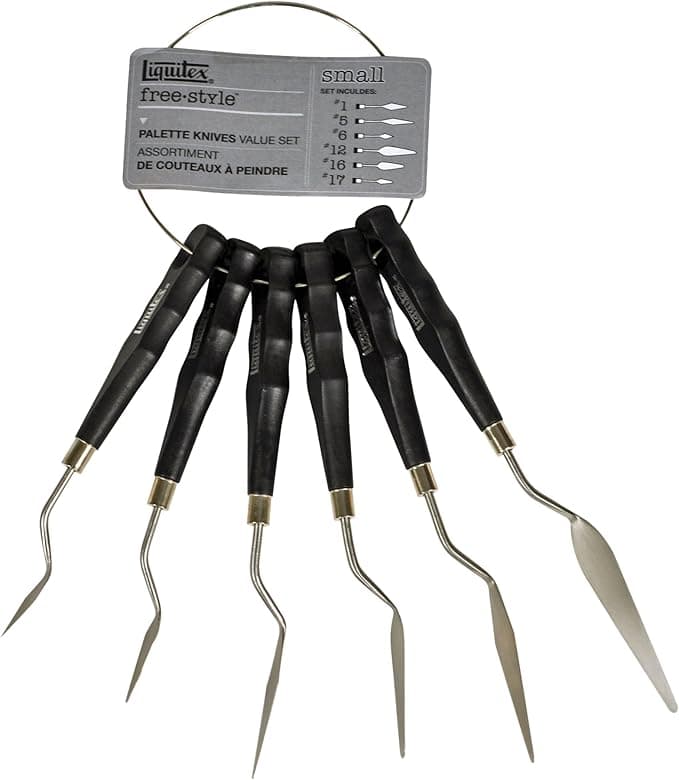 Liquitex Professional Freestyle Palette Knives, 6-Piece SetView on Amazon
As an Amazon Associate, Pigmentoria earns from qualifying purchases. This page may contain affiliate links.