Surrealism & Metaphysical
1911–1950Dreams, the unconscious, the uncanny. De Chirico's empty piazzas, Dalí's paranoiac landscapes, Magritte's impossible calm.
Academic technique in service of irrational content. Smooth surfaces and careful rendering make the impossible seem real.
de Chirico
1888–1978Italian-Greek
Father of Metaphysical painting. Empty Italian piazzas at impossible angles, long shadows, eerie silence.
Long cast shadows suggest late afternoon. Warm ochre architecture against deep green/blue sky creates temporal dislocation.
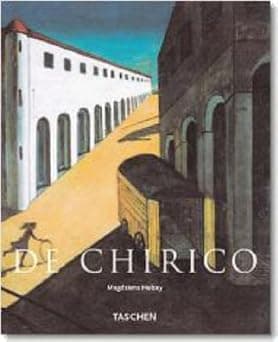 Further reading: Giorgio De Chirico: 1888-1978, the Modern Myth (Taschen Basic Art Series) — Magdalena Holzhey
Piazza ochre
Warm ochre of Italian architecture in late sun.
Material: Yellow ochre, Naples yellow, raw sienna
RGB(201, 160, 96)
Long shadow green
Dark green-black of impossibly long shadows.
Material: Viridian, lamp black, burnt umber
RGB(42, 58, 42)
Metaphysical sky
Strange greenish sky — neither day nor night.
Material: Viridian, cobalt blue, lamp black
RGB(42, 90, 74)
Arcade red
Terracotta red of arched colonnades.
Material: Red ochre, burnt sienna
RGB(139, 58, 42)
Mannequin flesh
Lifeless skin tone of faceless mannequins.
Material: Yellow ochre, lead white, raw umber
RGB(200, 176, 144)
Locomotive smoke
Grey smoke from distant trains — sign of the modern.
Material: Lamp black, lead white
RGB(91, 90, 88)
Pigments: Naples yellow · Ochre · Sienna · Viridian · Umber · Lamp black · Cobalt blue · Lead white
Dalí
1904–1989Spanish
Master of paranoiac-critical method. Melting watches, elephants on spider legs, landscapes of the subconscious.
Academic precision rendering impossible scenes. Smooth, almost photographic technique. Catalan coast as psychic landscape.
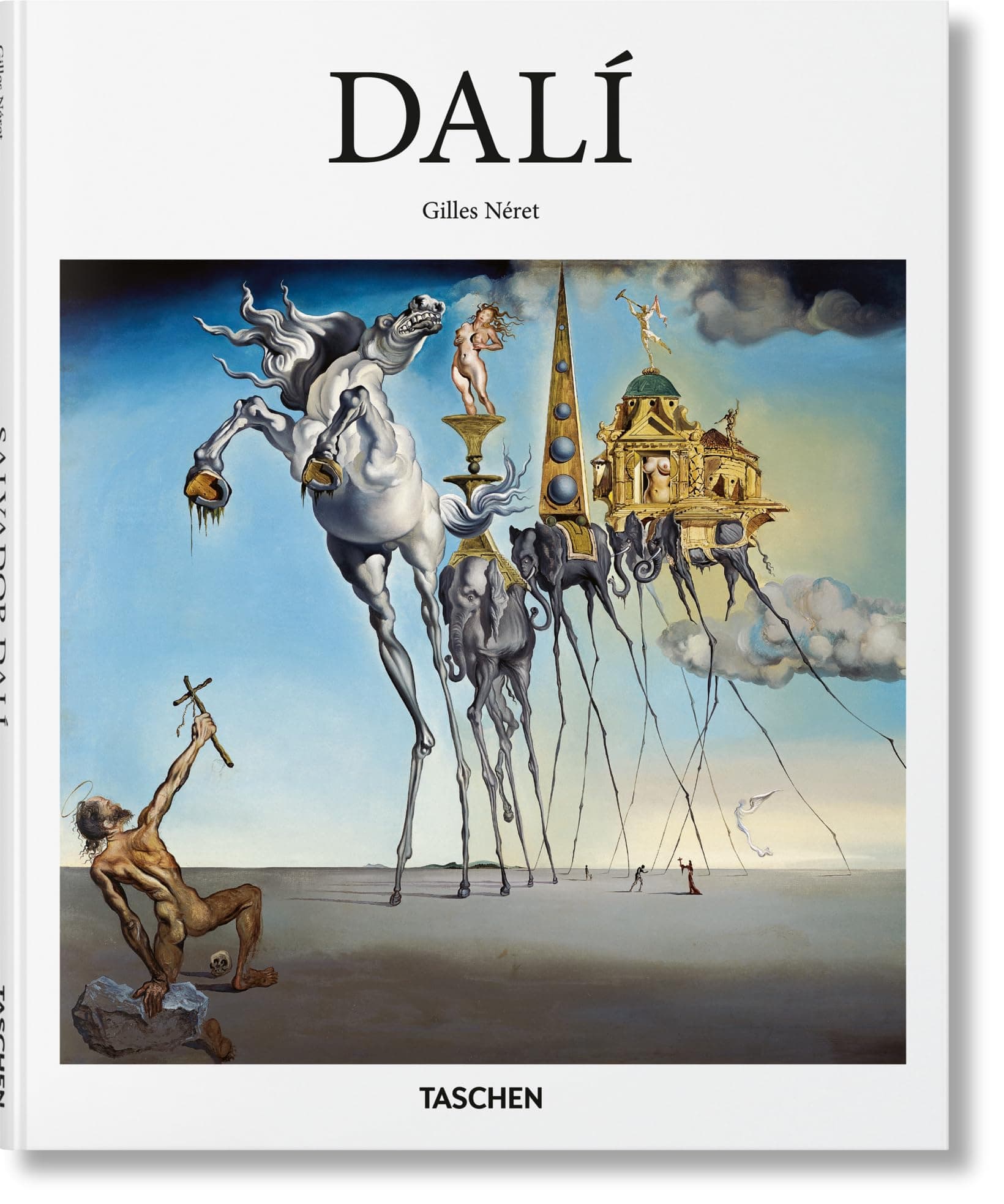 Further reading: Dalí (Basic Art) — Gilles Néret
Persistence amber
Warm amber of melting watches — golden Mediterranean light.
Material: Yellow ochre, cadmium yellow, raw sienna
RGB(200, 154, 80)
Cadaqués blue
Clear Mediterranean blue of the Catalan coast.
Material: Cobalt blue, cerulean blue, lead white
RGB(58, 106, 170)
Dream flesh
Uncanny flesh — perfectly rendered but wrong.
Material: Lead white, yellow ochre, vermilion
RGB(216, 184, 152)
Subconscious shadow
Dark shadow anchoring impossible forms.
Material: Burnt umber, raw umber, lamp black
RGB(76, 58, 42)
Elephant leg grey
Cool grey of impossible architecture and spider-legged elephants.
Material: Lead white, lamp black, raw umber
RGB(139, 138, 136)
Cosmic egg
The white of cracked eggs and empty skies.
Material: Lead white, zinc white
RGB(236, 224, 208)
Pigments: Cadmium yellow · Ochre · Sienna · Cobalt blue · Cerulean blue · Lead white · Vermilion · Umber · Lamp black · Zinc white
Magritte
1898–1967Belgian
Painter of impossible logic. Bowler hats, green apples, pipes that are not pipes — the treachery of images.
Deliberately unremarkable technique — flat, smooth, illustrational. The idea matters, not the paint.
 Further reading: Magritte (Basic Art) — Marcel Paquet
Magritte sky blue
The perfect, almost too-perfect blue of Magritte's skies.
Material: Cerulean blue, cobalt blue, lead white
RGB(90, 154, 202)
Cloud form
Fluffy white clouds — banal perfection.
Material: Zinc white, lead white
RGB(232, 232, 224)
Son of Man green
The green apple obscuring the face.
Material: Viridian, cadmium yellow, chrome green
RGB(74, 138, 58)
Bowler hat black
The flat black of the bourgeois bowler hat.
Material: Ivory black, bone black
RGB(28, 26, 26)
Theatrical red
Red curtains framing impossible scenes.
Material: Cadmium red, vermilion
RGB(171, 32, 32)
Overcoat grey
Neutral grey of the anonymous everyman's coat.
Material: Lamp black, lead white
RGB(106, 106, 106)
Pigments: Cobalt blue · Cerulean blue · Lead white · Zinc white · Cadmium yellow · Viridian · Chrome green · Bone black · Vermilion · Cadmium red · Lamp black
Related Materials
If this palette inspired you, here’s what to paint with.
 Faber-Castell Pitt Charcoal Set, 24 PieceView on Amazon
 Winsor & Newton Winton Oil Colour Starter Set, 10 TubesView on Amazon
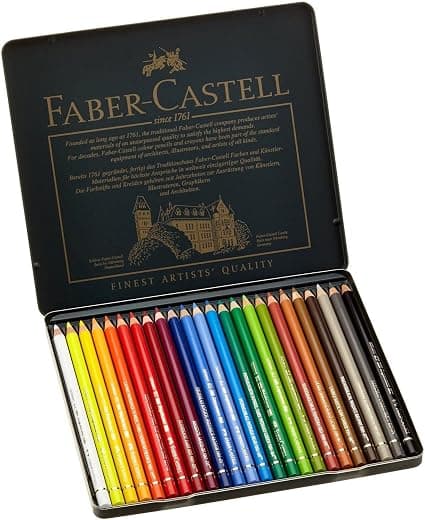 Faber-Castell Polychromos Artists’ Colour Pencils, Tin of 24View on Amazon
As an Amazon Associate, Pigmentoria earns from qualifying purchases. This page may contain affiliate links.