Autochrome Lumière
1907–1935The first practical color photography — potato starch grains dyed red, green, blue as a pointillist color filter.
Glass plate coated with dyed potato starch grains (RGB) then silver emulsion. Viewed as a transparency. Pointillist quality.
French
Invented by the Lumière brothers. The starch-grain filter creates a dreamy, impressionistic quality unlike any other medium.
The random distribution of dyed starch grains acts like a Seurat painting — colors mix optically at distance. Visible grain gives a painterly, pointillist character.
Starch grain orange
Warm orange-amber from the red-dyed starch grains — Autochromes are always warm.
Material: Red-dyed potato starch + orange filter effect
RGB(201, 138, 74)
Autochrome green
Soft green of garden scenes — slightly desaturated due to starch grain filter.
Material: Green-dyed potato starch grains
RGB(75, 122, 74)
Autochrome sky
Muted, soft blue — never as vivid as later color processes.
Material: Blue-dyed potato starch + panchromatic emulsion
RGB(106, 138, 170)
Autochrome flesh
Warm, grainy flesh — the pointillist grain is visible up close.
Material: Mixed starch grains rendering skin
RGB(200, 168, 136)
Autochrome shadow
Dark areas go warm brown, not neutral — the starch absorbs light.
Material: Low-density area showing combined starch effect
RGB(58, 48, 40)
Flower mauve
Soft muted purple of flower photography — Autochromes excel at botanical subjects.
Material: Red and blue starch grains in optical mixture
RGB(138, 106, 138)
Related Materials
If this palette inspired you, here’s what to paint with.
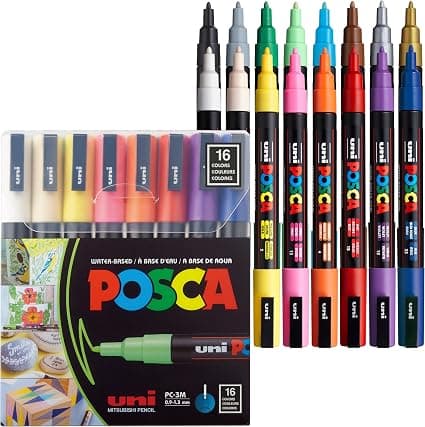 Posca Paint Markers, Fine Tip, Set of 16View on Amazon
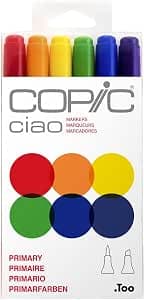 Copic Ciao Alcohol Markers, Set of 6View on Amazon
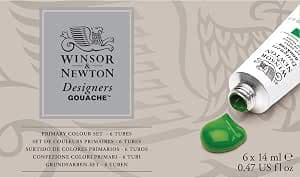 Winsor & Newton Designers Gouache, Set of 6 TubesView on Amazon
As an Amazon Associate, Pigmentoria earns from qualifying purchases. This page may contain affiliate links.