Lynette Yiadom-Boakye
b. 1977British-Ghanaian · Late 20th Century & Contemporary 1960–present
She paints portraits of people who do not exist. The figures are invented, assembled from drawings, scrapbooks and memory, and the refusal of a specific sitter is the point: they are not documents of anyone.
Lynette Yiadom-Boakye's color palette
The colours reconstructed for this artist, with the reasoning behind each. Each swatch is an interpretation of the materials behind it, not a sample taken from a single work. How the palettes are made
Invented portrait skin
Rich dark skin tone — warm, luminous from within.
Material: Burnt umber, yellow ochre, cadmium red, lead white
RGB(90, 58, 42)
Ground olive
Muted olive-brown backgrounds — timeless, placeless.
Material: Raw umber, yellow ochre, viridian
RGB(74, 74, 48)
Fiction white
Off-white of clothing — warm, not clinical.
Material: Lead white, raw umber, yellow ochre
RGB(209, 200, 184)
Nocturne blue (Yiadom-Boakye)
Deep blue-black of night scenes.
Material: Prussian blue, ivory black
RGB(42, 42, 74)
Skin highlight
Golden highlight where light catches dark skin.
Material: Yellow ochre, cadmium yellow, lead white
RGB(168, 138, 80)
Muted accent red
Subdued red — never shouts, always restrained.
Material: Burnt sienna, cadmium red, muted
RGB(140, 58, 42)
Pigments used: Cadmium red · Ochre · Umber · Lead white · Viridian · Prussian blue · Bone black · Cadmium yellow · Sienna
Formation
British, of Ghanaian parentage, trained at Central Saint Martins, Falmouth and the Royal Academy Schools in London. She is also a writer, and publishes short prose alongside exhibitions; the titles of the paintings are drawn from that practice and function as oblique commentary rather than description. She was nominated for the Turner Prize in 2013.
Technique
Fast, wet and completed in a single session where possible. Yiadom-Boakye works alla prima, usually finishing a canvas in one day while the paint remains workable, which produces a fluid, direct surface with visible brushwork and no laboured revision. She works on linen with a limited set of tools and builds the figure with broad strokes, keeping edges soft and detail selective — a hand or a shirt may be summarised in three marks while an eye is precisely observed. The speed is a discipline rather than a shortcut.
The palette
Dark, warm and closely valued. She works predominantly on deep grounds — greens, browns, blue-blacks — with figures emerging in a narrow tonal range, so the paintings require adjustment from the viewer's eye in the way a dim room does. Skin is built from a wide range of warm and cool darks, and the challenge she has described is making black skin luminous within a dark field rather than lighting it from outside, which is a specific technical problem that most of the European tradition never attempted.
Legacy
Her work has been widely discussed in relation to the near-total absence of Black figures in the European portrait tradition, and she has been consistent that the paintings are about painting rather than about representation as a corrective. That double reading — an art-historical argument and a refusal to be reduced to one — is much of why the work has been so influential on younger figurative painters.
By Pigmentoria · Published · Palette: interpretive reconstruction
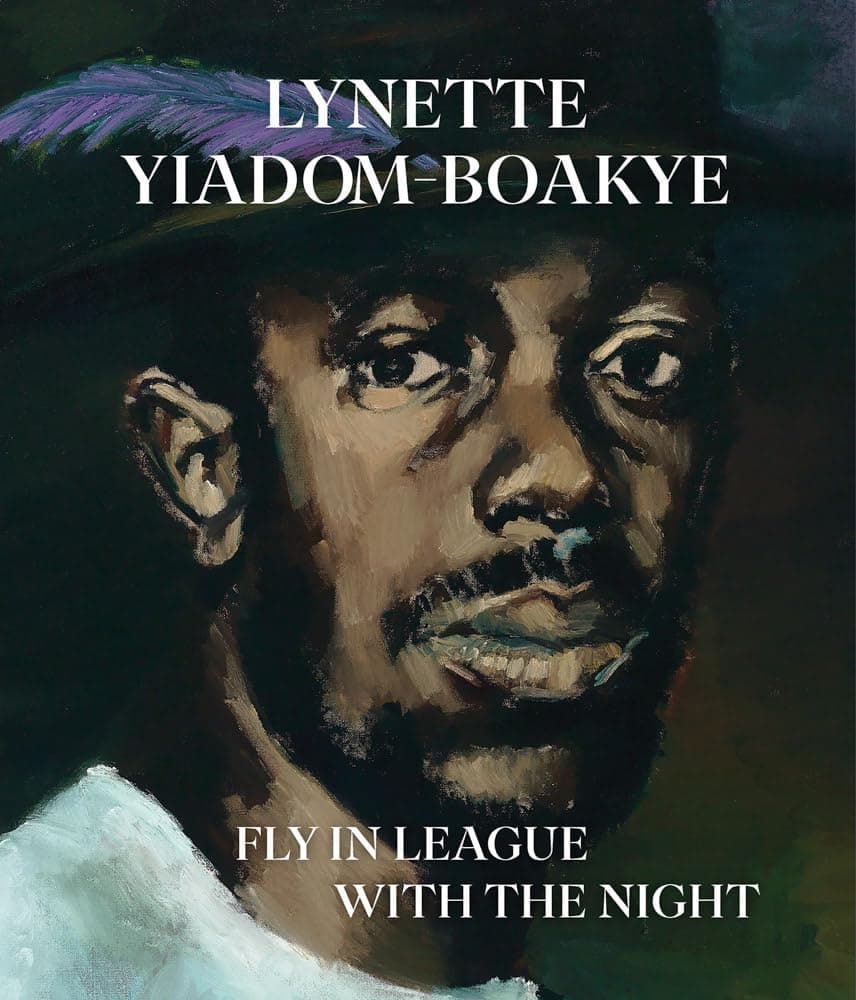 Further reading: Lynette Yiadom-Boakye: Fly In League With The Night — Isabella Maidment, Andrea Schlieker (Tate Britain)
As an Amazon Associate, Pigmentoria earns from qualifying purchases. This page may contain affiliate links.
Also in this era
Working at the same time
Elsewhere in the atlas, in other movements and other media, these were the hands at work during the same years.