Jacques-Louis David
1748–1825French · Neoclassicism 1760–1830
He painted the propaganda of a revolution, voted for the death of a king, went to prison when the Terror ended, and then became Napoleon's official painter. No artist has ever been closer to the machinery of political power.
Formation
Trained under Joseph-Marie Vien and won the Prix de Rome in 1774 on his fourth attempt, after an earlier failure severe enough that he attempted to starve himself. The Roman years remade him: he abandoned the Rococo he had been taught and returned committed to an antique severity. The Oath of the Horatii, exhibited in 1785, arrived four years before the Revolution and was read immediately as a political statement, which it may or may not have been intended as.
Technique
Drawing first, and drawing above everything. David worked from a fully resolved contour, transferred to a smooth, light, meticulously prepared canvas, and finished with an enamel-like surface in which the brushwork is deliberately suppressed — the paint is not supposed to be visible as paint. He worked from life and from casts, and built figures with sculptural clarity: each one is lit evenly, modelled fully in the round and placed on a shallow stage-like ground. The Death of Marat is the exception that proves the method, because the top half of that painting is an almost empty dark field, and its emptiness is what makes it modern.
The palette
Cool, clear and subordinated to drawing. Local colour is applied within firm contours rather than allowed to mix optically, and the range is restrained: earths, vermilion, lead white, ochres, with a strong red or blue placed for compositional emphasis. He belongs to the disegno side of the old argument, and his colour exists to describe form and to organise a composition, never to carry feeling on its own. That is precisely what Delacroix would attack a generation later.
Legacy
Neoclassicism became the official language of European art for fifty years, and David's studio trained the next generation — Gros, Girodet, Ingres. His fusion of history painting with contemporary politics also created the modern idea that a painting can be a public argument. Exiled to Brussels after Waterloo, he never returned to France.
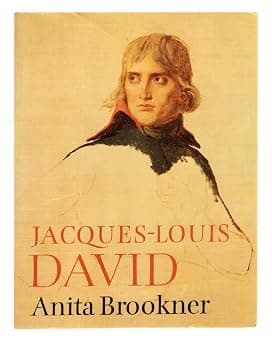 Further reading: Jacques-Louis David — Anita Brookner
Palette
The colours reconstructed for this artist, with the reasoning behind each.
Pigments used: Vermilion · Red lead · Ochre · Lead white · Umber · Bitumen · Lamp black
Also in this era
Working at the same time
Elsewhere in the atlas, in other movements and other media, these were the hands at work during the same years.