Raphael Sanzio
1483–1520Italian · High Renaissance 1490–1527
The painter whose reputation was so total that three centuries of academies taught his compositions as rules, and whose name became a synonym for a kind of effortlessness he achieved by working harder than anyone realised.
Formation
Son of a court painter in Urbino, trained in Perugino's workshop, and so fluent by his early twenties that his early panels are still occasionally attributed to his master. He moved to Florence in 1504 and absorbed Leonardo and Michelangelo in a matter of months — the drawings show him dismantling their innovations and reassembling them — then to Rome in 1508, where Julius II set him to work on the papal apartments at the same time as the Sistine ceiling was being painted a few rooms away. He died at thirty-seven, on his birthday, and was buried in the Pantheon.
Technique
A synthesis rather than an invention. He took Leonardo's glazing and softened edges, Michelangelo's sculptural anatomy, and Venetian colour reports, and fused them into something that reads as natural because the effort has been removed. His panels are built conventionally — gesso ground, careful underdrawing transferred from full-scale cartoons, oil glazes over a tempera-like underlayer — but the drawing underneath is extraordinary, and the surviving cartoons show how much was resolved before any paint touched the panel. The Vatican frescoes are true fresco with substantial a secco reworking, and by the later rooms the execution passes increasingly to a large workshop under his direction, which is why quality varies noticeably across the Stanze.
The palette
Balanced to the point of being a system. Raphael's colour is the clearest Renaissance demonstration of hierarchy by pigment cost: ultramarine for the Virgin, vermilion and red lake for the principal drapery, earths and lead white carrying everything else. What distinguishes him is the interval — he places a warm against a cool at exactly the pitch where both stay legible, and repeats a hue across a composition to lead the eye around it. Nothing is loud, and nothing is dull.
Legacy
The academies built their curriculum on him, which eventually made him a target: the Pre-Raphaelites named themselves for what they wanted to get back behind. That is a measure of dominance rather than a criticism of the painting. The Stanze remain the standard against which large-scale figure composition is taught.
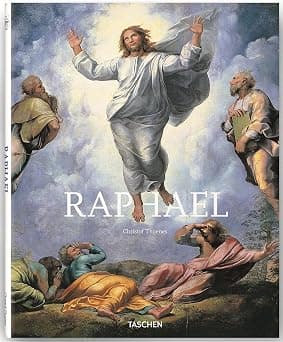 Further reading: Raphael — Christof Thoenes
Palette
The colours reconstructed for this artist, with the reasoning behind each.
Pigments used: Ultramarine · Vermilion · Madder and the red lakes · Ochre · Lead white · Azurite · Orpiment · Gold leaf
Also in this era
Working at the same time
Elsewhere in the atlas, in other movements and other media, these were the hands at work during the same years.