Giorgione
1477–1510Italian (Venetian) · Venetian Renaissance 1510–1576
Six paintings are securely his, he died at around thirty-three of plague, and he changed what a picture could be about — which is to say, nothing in particular. Giorgione invented mood as a subject.
Formation
Almost nothing is documented. He was from Castelfranco, was probably trained by Giovanni Bellini, and worked in Venice in the first decade of the sixteenth century for private collectors rather than for the church or the state — a new kind of patron who wanted paintings for a room rather than an altar. Vasari, writing decades later and at a distance, supplies most of the biography and cannot be relied on. Titian and Sebastiano del Piombo finished pictures he left incomplete, which is the root of the attribution problem that has followed him ever since.
Technique
Oil on canvas, worked wet and without the elaborate underdrawing of Florentine practice — X-rays of the Tempest show the composition changing substantially as he painted, including a figure painted out. That freedom is the technical news: he composed in paint rather than transferring a solved drawing, which is only possible with a slow oil medium and which becomes the Venetian norm afterwards. His surfaces are softly fused, with landscape and figure sharing the same atmospheric handling so that neither is set against the other.
The palette
Warm, tonal and deliberately unified. Rather than assigning strong local colours to objects, Giorgione lets a single light condition govern everything, so that flesh, cloth, foliage and sky all sit within a narrow warm range and the picture reads as an atmosphere. Ultramarine appears in the sky and distance, earths and lakes elsewhere, but the point is the relationship between them rather than any individual note. This is the beginning of tonal painting as a way of thinking.
Legacy
The Tempest is still unexplained — no agreed subject, no agreed programme, and a five-hundred-year literature attempting one — and its refusal to declare a topic is precisely what makes it modern. Poetic landscape as a genre, the pastoral, and the idea that a painting can be about a feeling all begin here and run through Titian to Watteau, Corot and beyond.
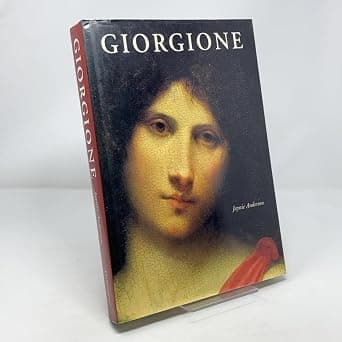 Further reading: Giorgione — Jaynie Anderson
Palette
The colours reconstructed for this artist, with the reasoning behind each.
Pigments used: Azurite · Green earth · Ochre · Lead white · Lead-tin yellow · Vermilion · Sienna · Lamp black · Verdigris
Also in this era
Working at the same time
Elsewhere in the atlas, in other movements and other media, these were the hands at work during the same years.