Tintoretto
1518–1594Italian (Venetian) · Venetian Renaissance 1510–1576
He allegedly hung a sign in his workshop reading "the drawing of Michelangelo and the colour of Titian", and then painted faster and darker than either. Tintoretto is the Venetian who turned colour into weather.
Formation
A dyer's son — tintore, hence the nickname — who worked outside the usual apprenticeship structures and had a reputation for underbidding rivals and installing finished pictures before the commission had been properly awarded. He spent his entire career in Venice, took on the Scuola Grande di San Rocco in the 1560s and painted it for over twenty years, producing a cycle of some sixty canvases that has never left the building.
Technique
Speed, and a dark ground. Where the earlier Venetians built up from a light preparation, Tintoretto laid in on a mid-tone or dark ground and worked upward into the light, which is far quicker and gives the shadows an immediate depth. He drew constantly from sculptural models and from small wax figures arranged in boxes with candles, which let him fix a raking light and then paint the figure from any angle — the violent foreshortenings throughout San Rocco come from that method. The handling is loose to the point of provocation, with highlights struck in as single loaded strokes, and contemporaries who admired Titian found it careless.
The palette
Restricted and dramatic. Because he worked on dark grounds, the palette functions as illumination rather than local colour: lead white does most of the work, with vermilion, lake and earths, and the blues held back. The result is a chiaroscuro that predates Caravaggio by a generation and reaches the viewer as a sense of light breaking into a dark room. The greens and the strange spectral tones that recur in the late canvases come from thin glazing over that dark base rather than from expensive pigment.
Legacy
El Greco very probably passed through his orbit, and the entire Baroque machinery of dark grounds, diagonal composition and theatrical light descends from what Tintoretto worked out in San Rocco. His reputation suffered for centuries against Titian's finish and recovered in the nineteenth, when speed and visible handling stopped being defects.
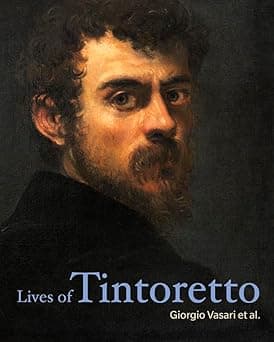 Further reading: Lives of Tintoretto — Giorgio Vasari, Carlo Ridolfi, et al. (Getty Publications)
Palette
The colours reconstructed for this artist, with the reasoning behind each.
Pigments used: Umber · Lead white · Ultramarine · Vermilion · Madder and the red lakes · Verdigris · Ochre
Also in this era
Working at the same time
Elsewhere in the atlas, in other movements and other media, these were the hands at work during the same years.