Lucian Freud
1922–2011British (German-born) · Mid-Century Figurative 1930–1980
He painted bodies as material — weight, temperature, mortality — and made his sitters come back hundreds of times over months and years. He said he wanted the paint to work as flesh does.
Lucian Freud's color palette
The colours reconstructed for this artist, with the reasoning behind each. Each swatch is an interpretation of the materials behind it, not a sample taken from a single work. How the palettes are made
Cremnitz flesh
Thick lead-white flesh — chalky, sculptural, pitiless.
Material: Cremnitz white, yellow ochre, cadmium red
RGB(217, 184, 152)
Subcutaneous blue
Blue veins visible through thin skin.
Material: Cobalt blue, lead white trace
RGB(107, 122, 138)
Studio mattress
The stained mattress and bedsheets of his studio.
Material: Lead white, raw umber, yellow ochre
RGB(201, 192, 176)
Flesh accent
Warm red of nipples, lips, inner flesh.
Material: Cadmium red, burnt sienna, lead white
RGB(184, 90, 74)
Studio floor
Paint-splattered floorboards of the studio.
Material: Raw umber, burnt umber, yellow ochre
RGB(91, 74, 48)
Flesh shadow (Freud)
Green in flesh shadows — the complementary undertone.
Material: Terre verte, viridian under flesh tones
RGB(91, 106, 74)
Pigments used: Cadmium red · Ochre · Lead white · Cobalt blue · Umber · Sienna · Green earth · Viridian
Formation
Born in Berlin, grandson of Sigmund Freud, and brought to Britain in 1933 as the family left Germany. He studied at the East Anglian School of Painting and Drawing and worked initially in a tight, linear, almost Northern Renaissance manner — the early portraits are sharp, dry and highly detailed. Around 1958 he changed decisively: he began standing to paint, switched to hog-hair brushes and stiff paint, and the surfaces became thick and worked.
Technique
Very long sittings and paint applied as substance. Freud worked from life exclusively, in daylight or under a single bulb, in sessions that could run to hundreds of hours for one canvas — sitters have described eighteen months for a single portrait. He used Cremnitz white, an unusually dense lead white, specifically for flesh, because its weight and opacity behave like the thing being painted. He cleaned the brush after nearly every stroke to keep the colours from muddying, and the surface builds into a crusted, worked, physical topography that follows the form of the body.
The palette
Earth, bone and bruise. Ochres, umbers, terre verte, Cremnitz white, vermilion, black and a range of greens and violets pushed into the flesh. Skin in a Freud is never a single colour: it is a mottled field of greens, greys, pinks and yellows, which is anatomically accurate in a way flattering portraiture never is. Backgrounds are usually studio walls, floorboards and heaped rags, painted with the same attention as the sitter and in the same range, so nothing is decorative.
Legacy
He is central to the group of London painters — with Bacon, Auerbach and Kossoff — who kept ambitious figurative painting alive through the decades when it was considered finished. Benefits Supervisor Sleeping set an auction record for a living artist in 2008. His method, requiring extraordinary amounts of the sitter's time, is also a documented history of the relationships around him.
By Pigmentoria · Published · Palette: interpretive reconstruction
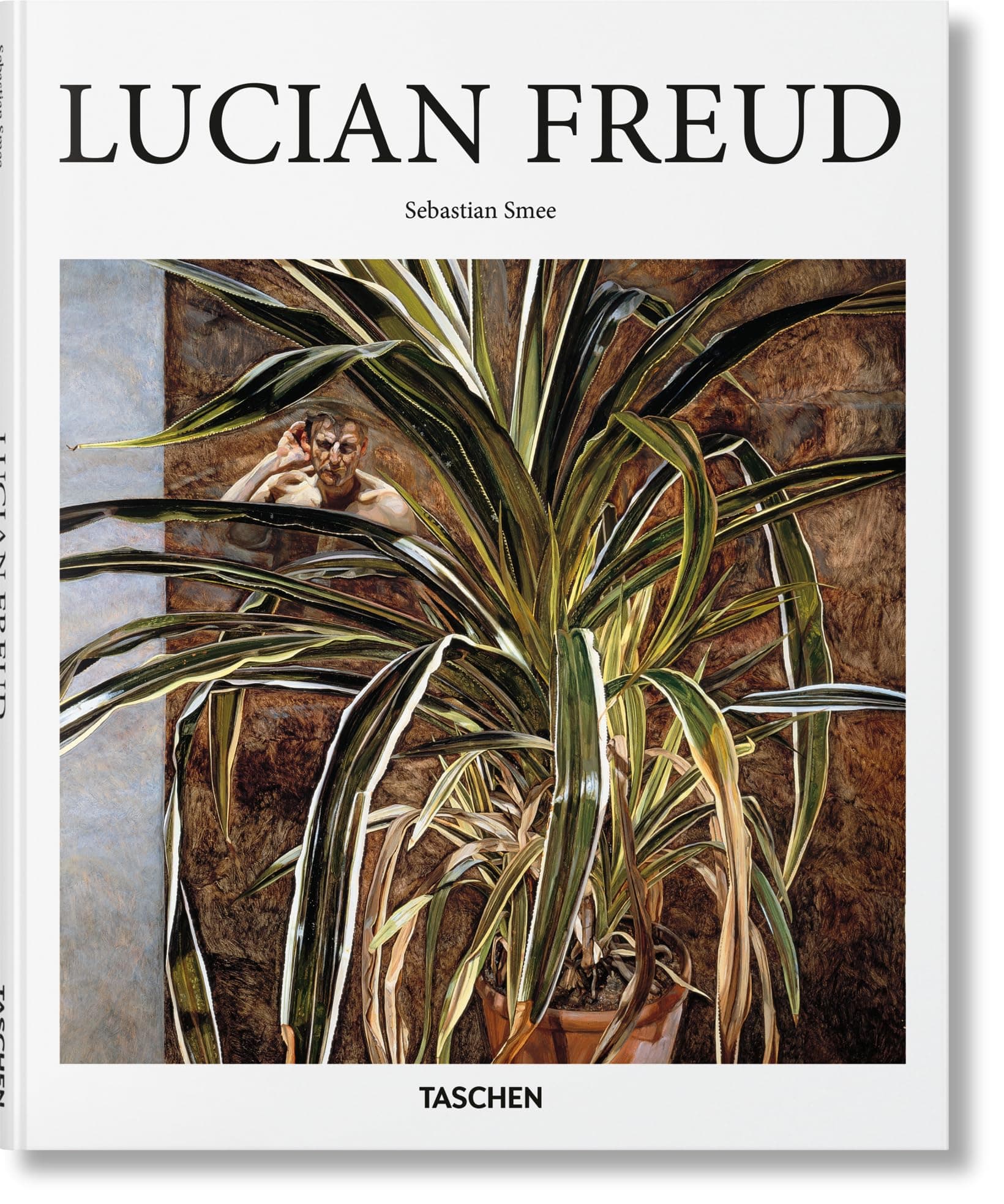 Further reading: Lucian Freud — Sebastian Smee
As an Amazon Associate, Pigmentoria earns from qualifying purchases. This page may contain affiliate links.
Also in this era
Working at the same time
Elsewhere in the atlas, in other movements and other media, these were the hands at work during the same years.