Francis Bacon
1909–1992Irish-British · Mid-Century Figurative 1930–1980
He destroyed most of what he made, refused to draw, painted screaming popes and distorted friends, and worked in a studio so buried in debris that it was excavated archaeologically and rebuilt in a museum.
Formation
Irish-born, thrown out of the family home in his teens, self-taught, and working as a furniture and interior designer before painting seriously. He dated his own career from Three Studies for Figures at the Base of a Crucifixion in 1944, having destroyed nearly everything earlier. He was a heavy gambler and drinker, and the relationships — particularly with George Dyer, who died of an overdose in 1971 on the eve of Bacon's Paris retrospective — run directly through the triptychs.
Technique
Direct, fast and unrepeatable. Bacon worked on the unprimed reverse side of the canvas, which is absorbent and unforgiving: paint sinks in, nothing can be wiped off, and a failed stroke destroys the picture. He used brushes, rags, sponges, his hands and thrown paint, and worked from photographs — Muybridge's motion studies, medical textbooks, film stills, snapshots of friends — rather than from life, because he said he could not distort a person in front of them. He never drew. The studio floor served as his palette.
The palette
Flat saturated grounds against violently mixed flesh. Bacon set his figures in fields of pure orange, blood red, purple or acid green — often applied evenly and without incident — and painted the body in twisted mixtures of pink, white, green and grey. The contrast is the mechanism: the ground is inert and hard, the figure is unstable, and the flat colour pushes the distorted form forward. He also used the cage-like line drawings around figures to isolate them within that flatness.
Legacy
He is the dominant European figurative painter of the post-war period and the triptych format, borrowed from the altarpiece, became his signature structure. His reconstructed studio at the Hugh Lane in Dublin, with its seven thousand catalogued items, is an unusually complete record of how a painter actually worked, and it confirmed how thoroughly photographic his sources were.
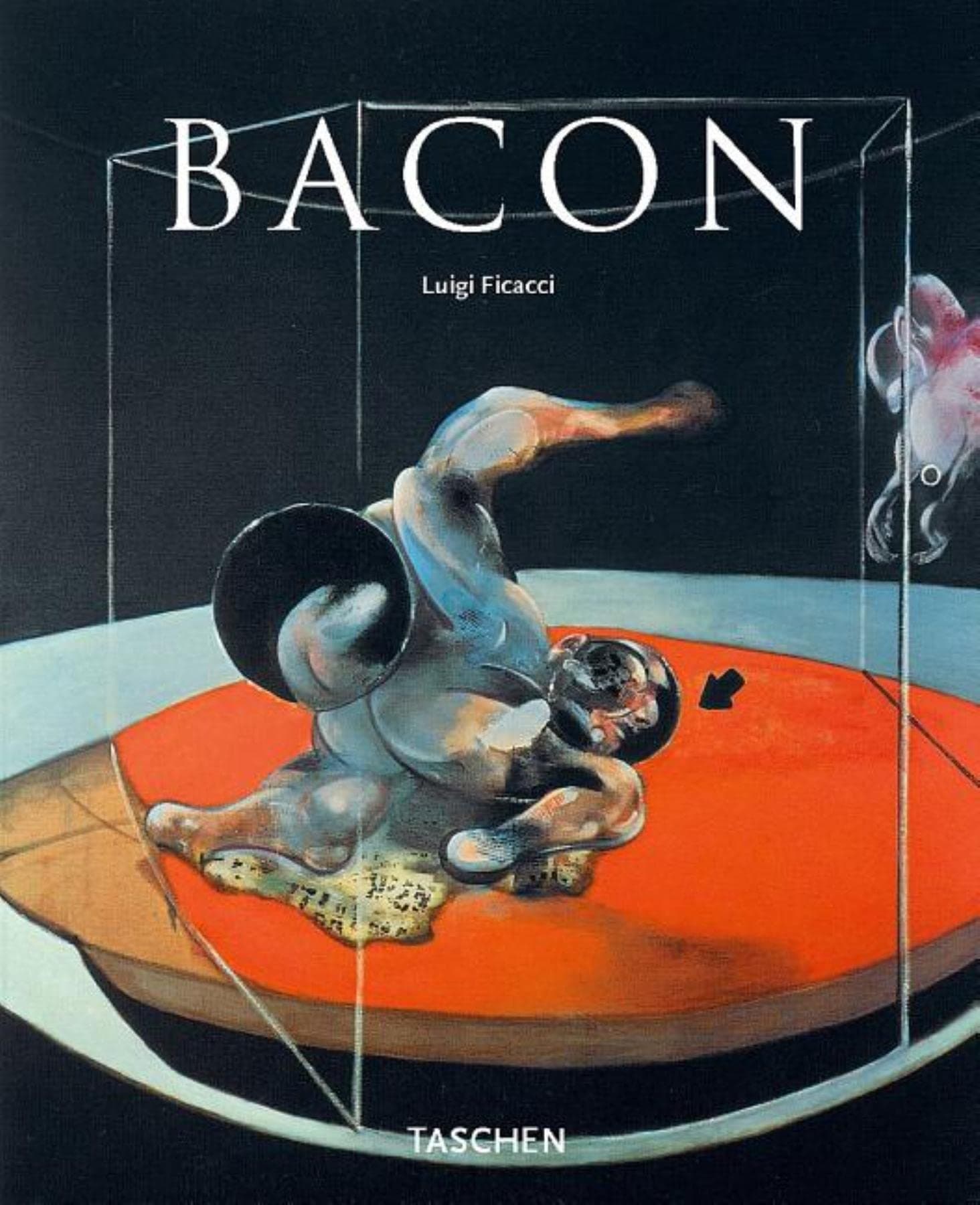 Further reading: Bacon (Taschen Basic Art) — Luigi Ficacci
Palette
The colours reconstructed for this artist, with the reasoning behind each.
Pigments used: Cadmium red · Cadmium yellow · Alizarin crimson · Sienna · Lead white · Lamp black · Ultramarine · Prussian blue · Ochre
Also in this era
Working at the same time
Elsewhere in the atlas, in other movements and other media, these were the hands at work during the same years.