Edvard Munch
1863–1944Norwegian · Post-Impressionism 1886–1910
He made an image so widely reproduced that it now functions as an emoji. The Scream exists in four versions, and the sky in it was described by Munch as the actual colour he saw over Oslo one evening — possibly a real atmospheric event.
Formation
Norwegian, and marked early by illness and death: his mother died of tuberculosis when he was five, his elder sister when he was fourteen, and his father was severely religious and prone to depression. He trained in Kristiania, absorbed Impressionism and then Symbolism in Paris, and worked in Berlin in the 1890s where his first exhibition was closed after a week amid uproar, which established his reputation immediately. He had a breakdown in 1908, after which the work becomes calmer and more colourful.
Technique
Deliberately rough and unprecious. Munch thinned his paint, let it run, scraped it back, left canvas bare, and used a heavy, undisguised outline to carry emotional weight. He also subjected paintings to what he called the "horse cure": leaving them outdoors in Norwegian weather, exposed to rain and snow, on the grounds that they needed to endure. Conservators consequently deal with surfaces that were damaged on purpose. He worked extensively in woodcut and lithography, often cutting the block into pieces to ink them separately, and reused compositions across media throughout his life.
The palette
Emotional rather than observed, and very saturated. Blood reds, acid yellows, deep blue-greens, with faces sometimes green or violet. In The Scream the sky is built from bands of cadmium and chrome orange against a blue-black fjord, and the whole composition is organised so the curves of the sky continue into the figure. Modern analysis has found some of his cadmium yellows degrading to a whitish crust — his habit of using materials roughly and leaving pictures outside did not help.
Legacy
German Expressionism begins substantially with the Berlin exhibitions, and the treatment of psychological state as a legitimate primary subject runs from him through the twentieth century. He left his entire remaining output — over a thousand paintings and thousands of prints — to the city of Oslo, which is why the Munch Museum holds a body of work that would otherwise have been dispersed.
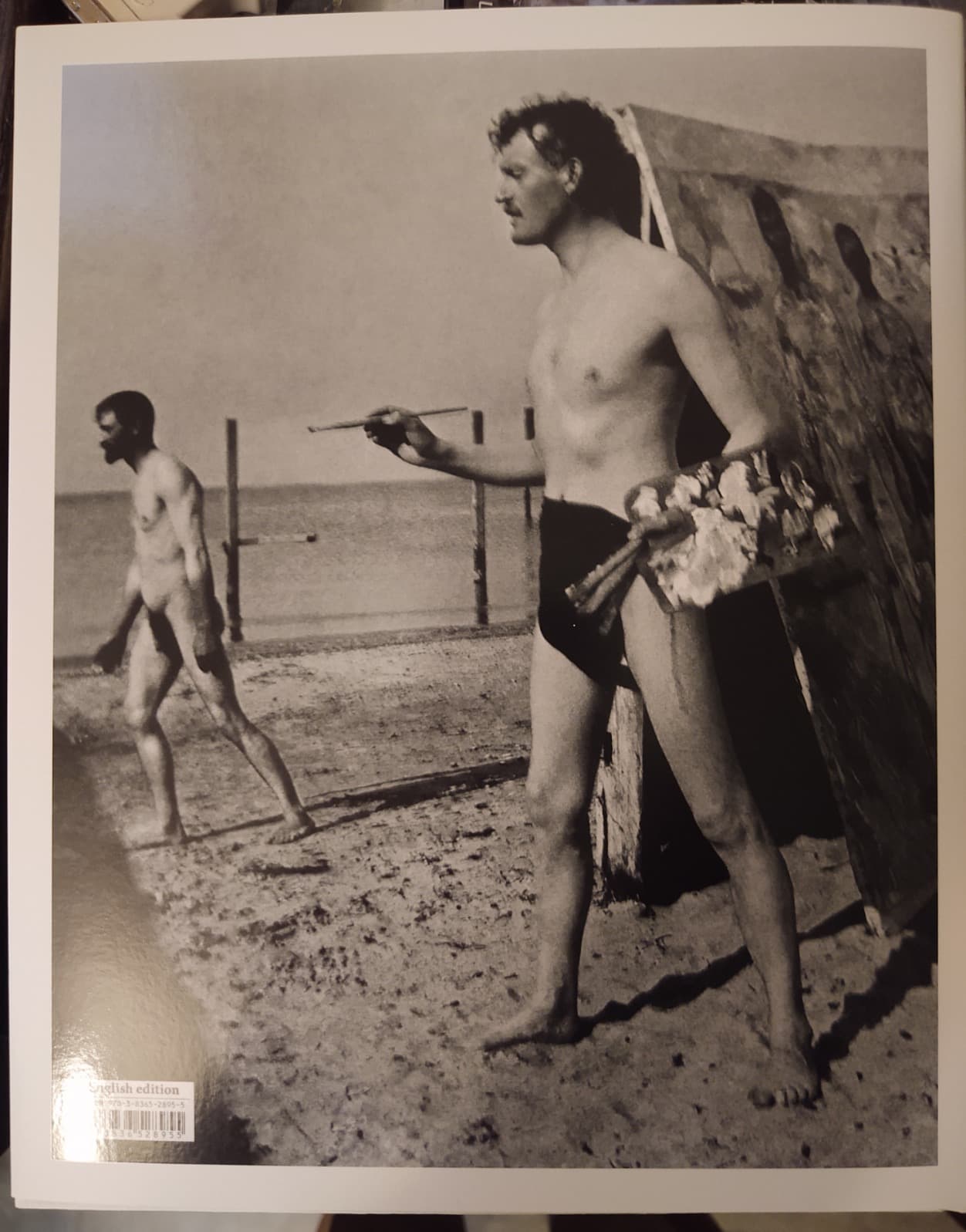 Further reading: Munch (Basic Art) — Ulrich Bischoff
Palette
The colours reconstructed for this artist, with the reasoning behind each.
Pigments used: Vermilion · Chrome yellow · Cadmium yellow · Prussian blue · Cobalt blue · Green earth · Chrome green · Lead white · Ochre · Viridian · Alizarin crimson
Also in this era
Working at the same time
Elsewhere in the atlas, in other movements and other media, these were the hands at work during the same years.