John Everett Millais
1829–1896British · Romanticism 1780–1850
He co-founded the most radical group in British art at nineteen and ended up its President at the Royal Academy, rich and comfortable — a trajectory his former allies never quite forgave. Ophelia is one of the most reproduced paintings in Britain.
John Everett Millais's color palette
The colours reconstructed for this artist, with the reasoning behind each. Each swatch is an interpretation of the materials behind it, not a sample taken from a single work. How the palettes are made
Ophelia's stream
Intense green painted from direct observation.
Material: Emerald green, viridian on wet white ground
RGB(59, 122, 74)
Pre-Raphaelite red
Vermilion on white ground — maximum saturation.
Material: Vermilion on wet lead white
RGB(168, 48, 40)
Luminous flesh
Flesh on white ground — more luminous than academic.
Material: Vermilion, lead white, yellow ochre on wet white
RGB(225, 192, 160)
Wildflower purple
Purple wildflowers — each from a real specimen.
Material: Cobalt violet, ultramarine, crimson lake
RGB(122, 74, 138)
Stream water brown
Real English stream — observed, not idealized.
Material: Raw umber, terre verte, yellow ochre
RGB(90, 90, 58)
Ophelia's dress
Waterlogged white dress — grey-warm with water.
Material: Lead white, raw umber, lamp black
RGB(200, 192, 176)
Pigments used: Emerald green · Viridian · Vermilion · Lead white · Ochre · Ultramarine · Madder and the red lakes · Cobalt violet · Green earth · Umber · Lamp black
Formation
A prodigy: admitted to the Royal Academy schools at eleven, the youngest ever. In 1848 he founded the Pre-Raphaelite Brotherhood with Rossetti and Holman Hunt, in revolt against what they saw as the slick formulae taught in Raphael's name. Ruskin defended them publicly, which secured their reputation; Millais then went on to marry Ruskin's wife after her marriage was annulled, which is the best-known scandal in Victorian art. His later career was commercially enormous and critically dismissed.
Technique
The Pre-Raphaelite method was invented to solve a colour problem. They painted onto a wet white ground — a layer of white lead applied thinly and worked into before it dried — so that colours sit over pure white and stay brilliant instead of being dulled by the traditional dark ground. Every detail is painted from the object at close range, in focus across the entire picture surface, with no atmospheric softening at any depth. Ophelia's riverbank was painted outdoors over five months near Ewell; the figure was painted separately, with Elizabeth Siddal lying in a bath heated by lamps beneath, which went out, giving her a serious chill.
The palette
Brilliant, saturated and unmodulated, which is exactly what the wet white ground makes possible. The new nineteenth-century pigments were essential: they wanted intensity, and cobalt, the chromes, the cadmiums and viridian delivered it. Colour is local and specific rather than tonally unified — a green is the green of that leaf — and the result reads as almost hallucinatory clarity, closer to stained glass than to conventional oil painting.
Legacy
Pre-Raphaelitism reshaped Victorian visual culture and fed into the Arts and Crafts movement, book illustration and design. Millais's own later reputation collapsed under charges of selling out — his Bubbles was used to advertise soap — and has been reassessed more sympathetically in recent decades, largely by looking at the paint rather than the sentiment.
By Pigmentoria · Published · Palette: interpretive reconstruction
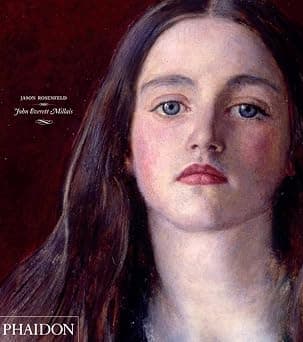 Further reading: John Everett Millais — Jason Rosenfeld
As an Amazon Associate, Pigmentoria earns from qualifying purchases. This page may contain affiliate links.
Also in this era
Working at the same time
Elsewhere in the atlas, in other movements and other media, these were the hands at work during the same years.