Bartolomé Esteban Murillo
1617–1682Spanish · Baroque Chiaroscuro 1590–1680
The most commercially successful painter in seventeenth-century Seville, adored for two centuries, then dismissed as sentimental for most of a third. The technical accomplishment was never in question; the taste for the subjects was.
Formation
Orphaned young in Seville, trained under Juan del Castillo, and established by his early thirties with a cycle for the Franciscan monastery. He founded and led the Seville academy of drawing in 1660, ran a large workshop, and painted almost exclusively religious subjects for churches and confraternities, plus a set of genre scenes of street children that were bought largely by foreign collectors. He died after falling from scaffolding while working on an altarpiece in Cádiz.
Technique
A deliberate softening of everything Zurbarán had hardened. Murillo worked with fused, blended transitions, a warm mid-tone ground, and a delicate handling of edges — the estilo vaporoso, the vaporous style, in which contours dissolve into their surroundings. He glazed extensively over a light underpainting to keep the shadows transparent, and his flesh painting is built in thin, warm, semi-opaque layers. Technically this is closer to Venice and to Rubens than to the Spanish tenebrist tradition he came out of, and it made him legible to a European audience in a way Zurbarán was not.
The palette
Warm, soft, and lit from within. Lead white, ochres, vermilion, red lake, umber, and blues in the Immaculate Conceptions, where the iconography demands a blue and white Virgin against a golden light. His characteristic effect is a warm silvery haze in which no edge is quite hard, achieved by keeping the value range compressed and letting temperature rather than contrast carry the modelling. It is a palette designed to be sympathetic rather than confrontational.
Legacy
He was, for a long time, the Spanish painter in the European canon — more admired than Velázquez in the eighteenth and early nineteenth centuries, extensively copied, and among the most stolen artists during the Napoleonic occupation. The reaction against him was as excessive as the enthusiasm, and recent scholarship has been quietly restoring the reputation by looking at the paintings rather than at the sentiment attributed to them.
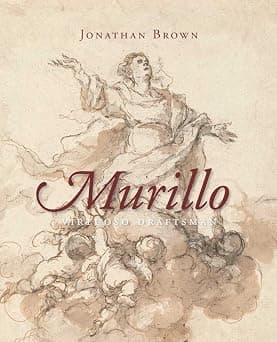 Further reading: Murillo: Virtuoso Draftsman — Jonathan Brown (Yale University Press)
Palette
The colours reconstructed for this artist, with the reasoning behind each.
Pigments used: Ultramarine · Lead white · Ochre · Umber · Sienna · Naples yellow · Vermilion · Lamp black
Also in this era
Working at the same time
Elsewhere in the atlas, in other movements and other media, these were the hands at work during the same years.