Rembrandt van Rijn
1606–1669Dutch · Baroque Chiaroscuro 1590–1680
He painted himself about eighty times over forty years, which amounts to the most sustained record of a human face ageing in the history of art. He also went bankrupt, and the late self-portraits are painted by a man with nothing left to protect.
Formation
A miller's son from Leiden, briefly at university, then apprenticed to Pieter Lastman in Amsterdam, who taught him history painting and Italian composition. He set up in Leiden, moved to Amsterdam in 1631, and became the most successful portraitist in the city within five years. The collapse came later: overspending on a house and a vast art collection, the death of Saskia, changing fashion, and an insolvency in 1656 in which the inventory of his possessions was drawn up and survives — one of the most valuable documents we have about how a seventeenth-century painter actually lived.
Technique
The whole career is a movement from smooth to rough. The early work is tight and highly finished; the late work is built in impasto so thick that light catches the physical ridges of paint and the surface reads as texture before it reads as image — a sleeve is a slab of lead white dragged with a knife, and it becomes gold braid only at a distance. He worked over quartz-and-earth grounds, glazed transparent darks over opaque lights, and scratched into wet paint with the brush handle. Contemporaries complained; one said the paint hung off his portraits like mud, and a visitor was reportedly warned not to get too close because the smell of the pigment would sicken him.
The palette
Famously narrow. Lead white, ochres, umbers, bone black, vermilion and a red lake, with almost nothing expensive — analysis of his work finds very little ultramarine and no exotic materials. The luminosity does not come from the pigments but from the structure: warm transparent glazes over opaque underpainting, so that light penetrates the shadows and returns, which is why a Rembrandt darkness has depth while a black passage in a lesser painter is a hole. He also mixed his own grounds and used quartz to give body cheaply.
Legacy
The Night Watch is the most examined painting in the Netherlands and remains under continuous scientific study. The visible brushstroke as an expressive carrier — the idea that how the paint is put on is itself the content — runs from his late work through Goya and Manet to the twentieth century. And the Rembrandt Research Project, which spent decades deattributing pictures, turned his catalogue into the most contested in art history.
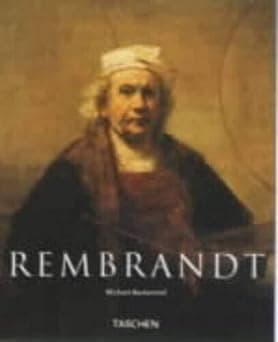 Further reading: Rembrandt (Basic Art) — Michael Bockemühl
Palette
The colours reconstructed for this artist, with the reasoning behind each.
Pigments used: Lead-tin yellow · Umber · Bitumen · Bone black · Vermilion · Ochre · Lead white · Sienna
Lexicon: Hue · Chiaroscuro · Value
Also in this era
Working at the same time
Elsewhere in the atlas, in other movements and other media, these were the hands at work during the same years.